
SHORT FILM | 2024
Directed by Aella Jordan-Edge
Written by Aella Jordan-Edge & Amy Tattersall White
Produced by Owen Thomas
STARRING Abigail Lawrie, Liv Hill and Tom Victor
OFFICIAL SELECTIONS
Kerry International Film Festival 2024
Cornwall Film Festival 2024 (Best of the South West)
The Bay International Film Festival 2024 (Finalist)
Longlisted for the British Short Film Awards 2024
Best Short Film
Best English Short Film
Best Student Film
Best Actress - Abigail Lawrie
Best Supporting Actress - Liv Hill
Best Production Design
Best Editing
Best Sound Design
Best Costume Design
Best Hair & Make-up
CREDITS
Casting Director Verity Naughton
Cinematography by Bea da Gama
Camera Operator Essi Hyrkki
Focus Puller Sam Riley
2nd AC Dan Hempenstall
Loader Alysons Page
Steadicam Lee Brown
Gaffer Elena Nassati
Production Design by Katlin Loomets
Costume Design by Vera Moles
Hair & Make-Up by Lauryn Griffiths, Danielle Helm & Phoebe Hockey
Edited by Mariana Moraes
Original Score by Rotem Frimer
Sound Design by Joseph Russell
Production Sound Mixer Emily Compton
1st AS Harry King
2nd AS Dom Jakubauskus
Colour Graded by Karolina Matela
Lead Compositor Thompson Okuku
Production Manager Georgia Pierce
PC Ellie Lomas
Script Supervisor Tirion Ashton
1st AD Sharifa Sheikh
2nd AD Clara Wilson
3rd AD Lara Mandell
Historical Advisor Stephen Polglaise


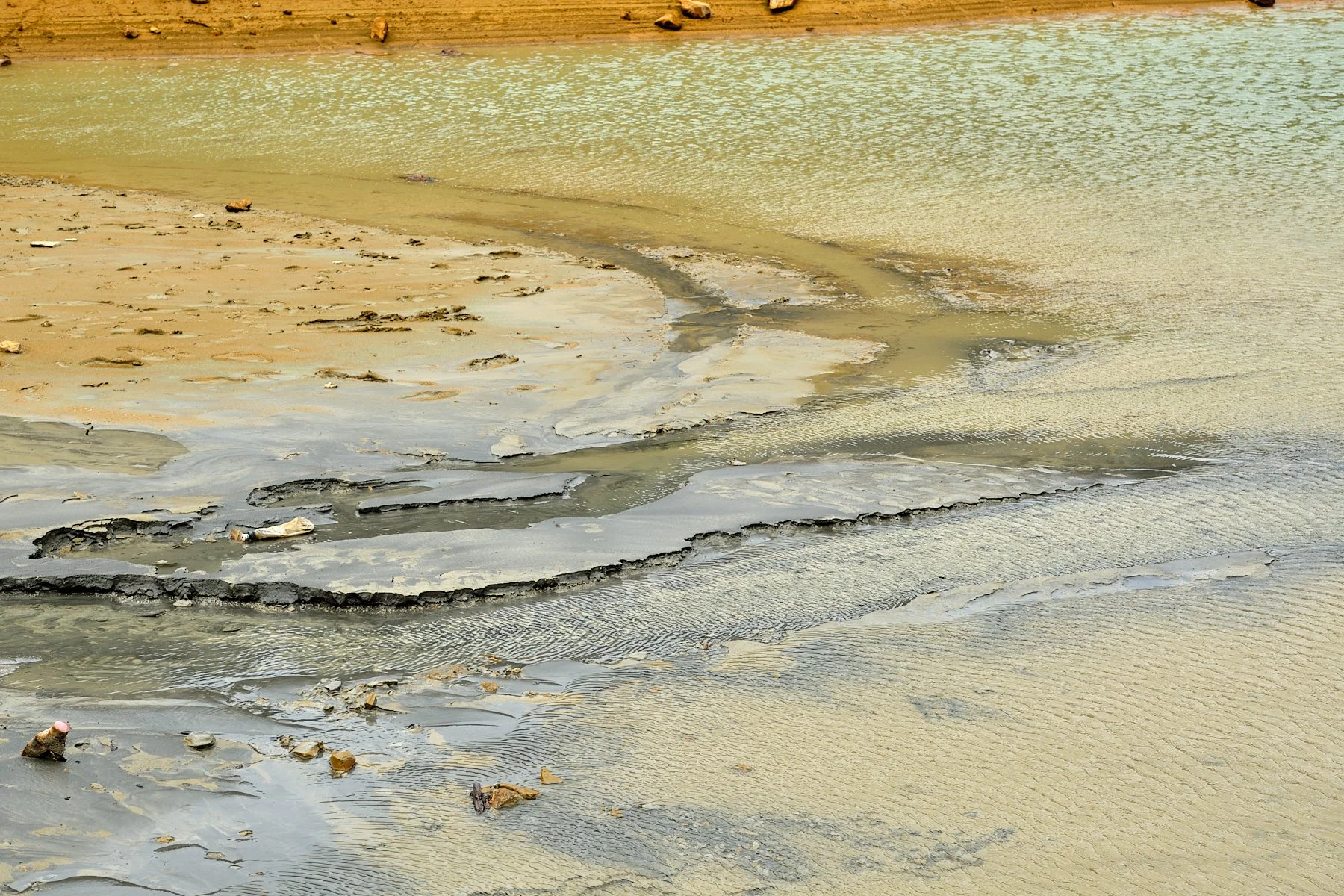
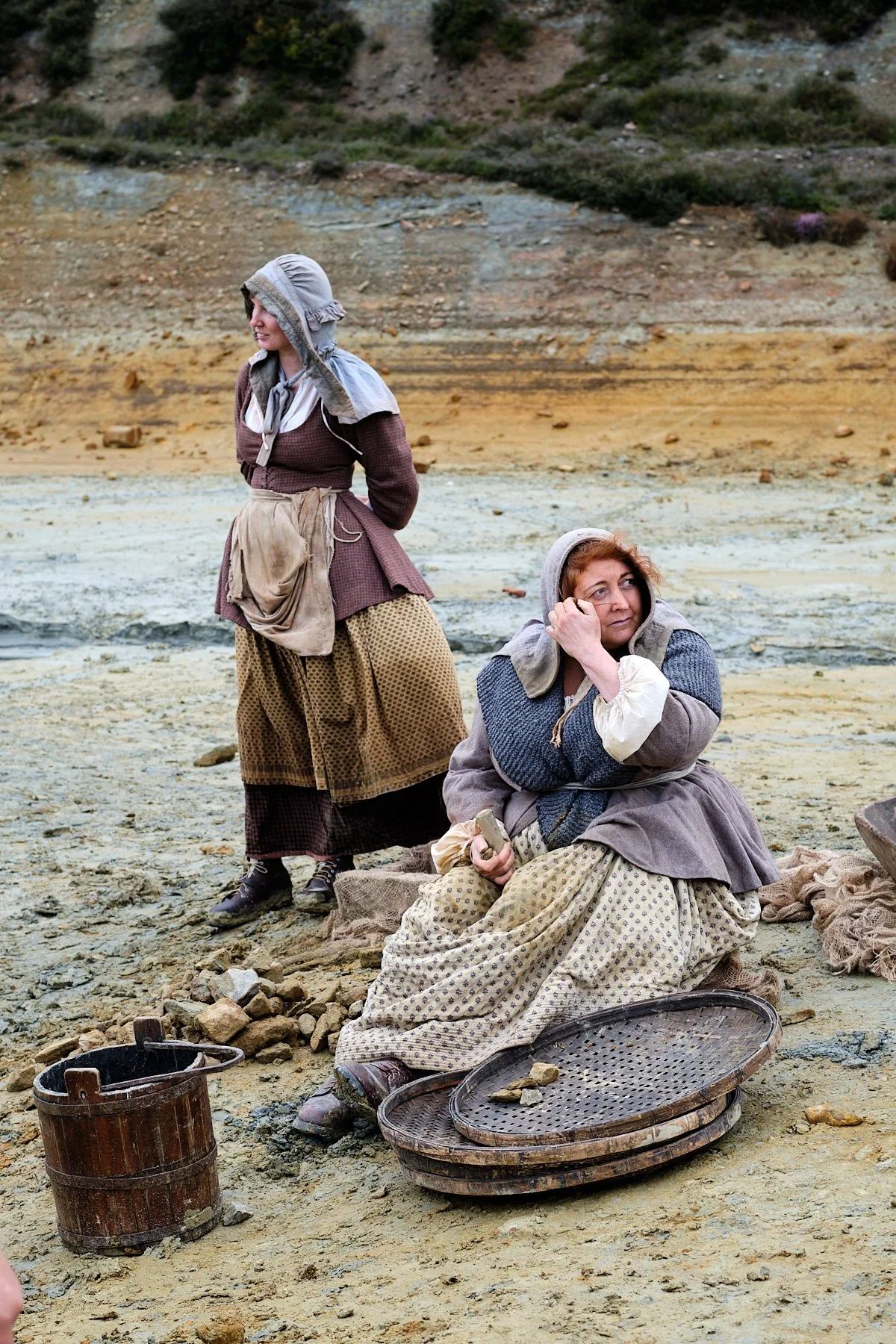
Through colour exploration, we developed the idea of visually merging the women working above ground with the surrounding landscape. Hues of blue and terracotta, combined across a variety of patterns, formed the basis of the costume proposal. The idea was that iron from the mines would gradually stain the women’s clothing through their sweat, creating a visual connection between their labour and the landscape.
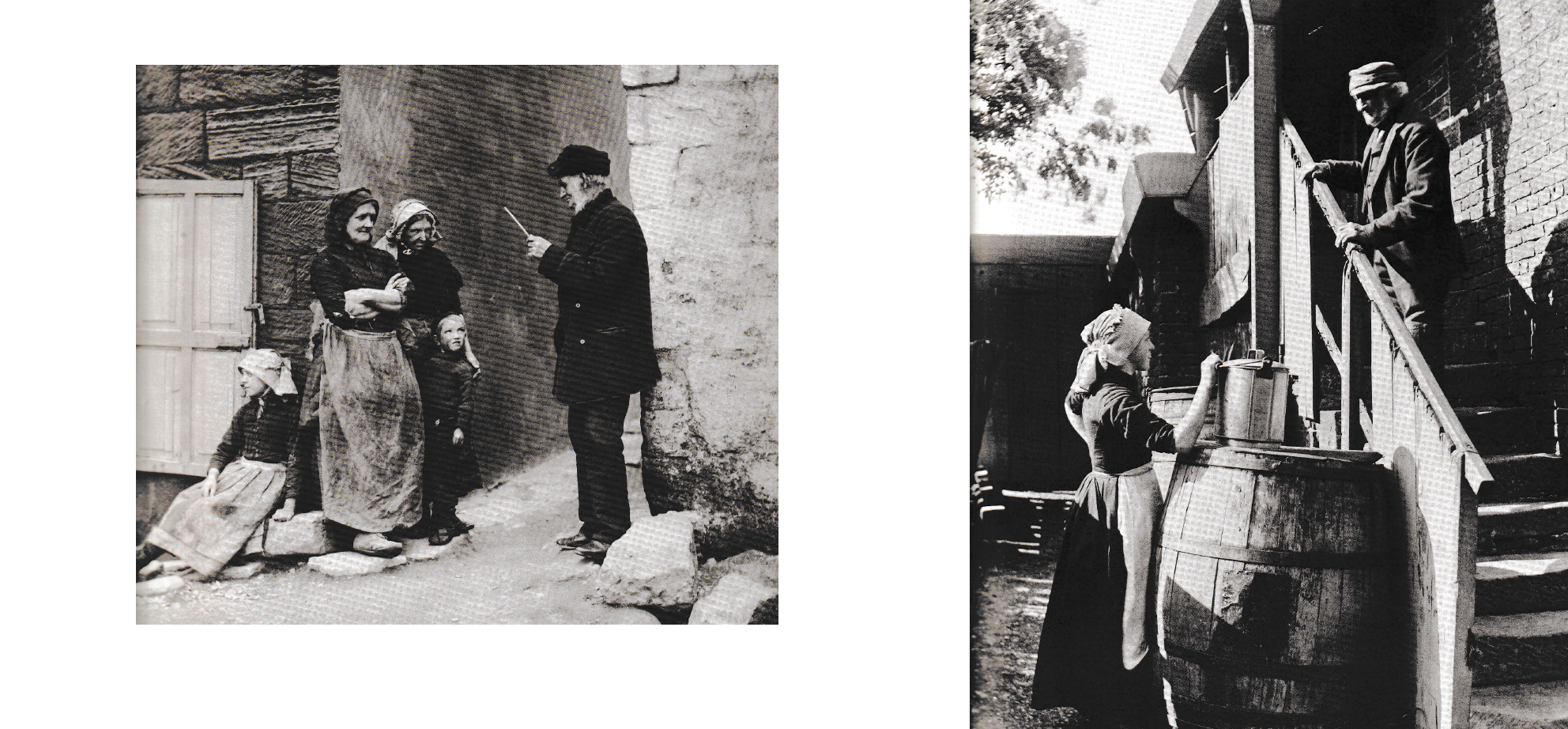
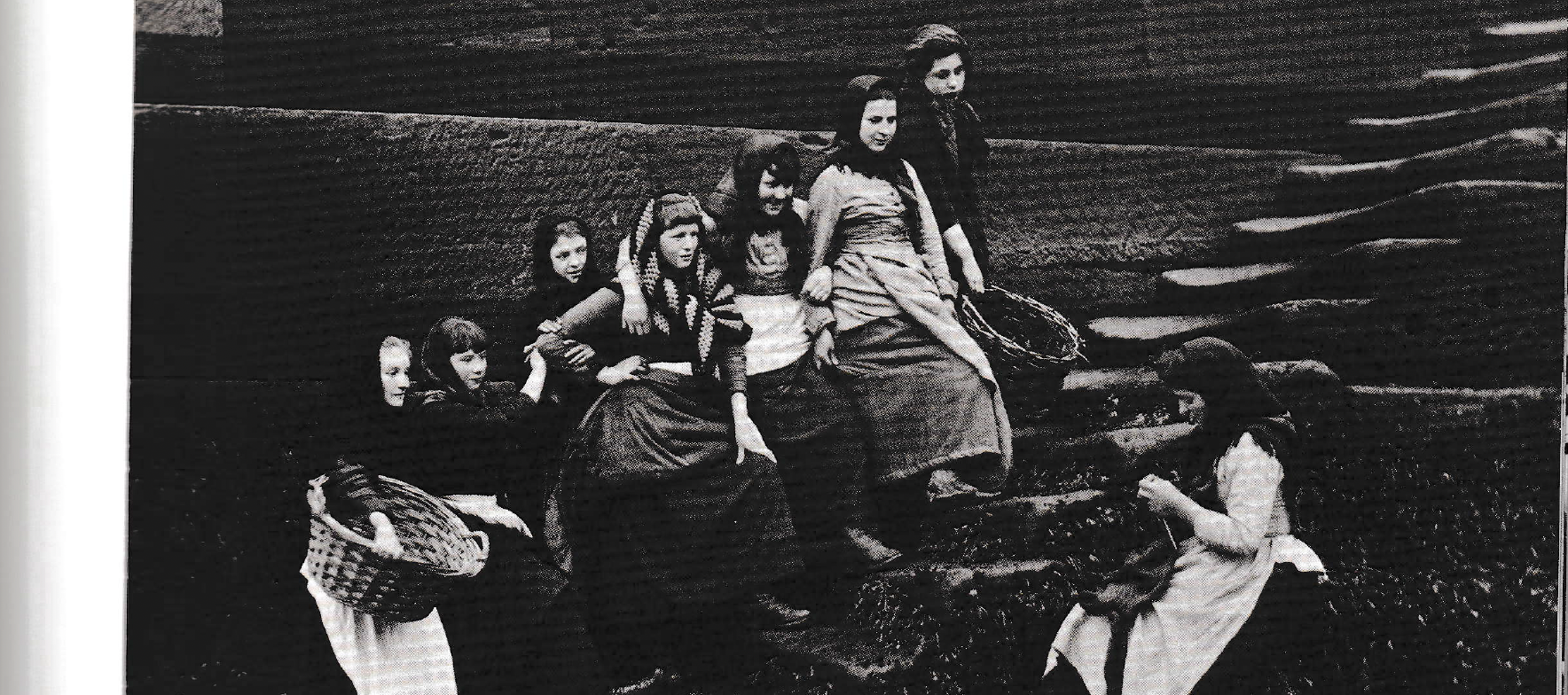

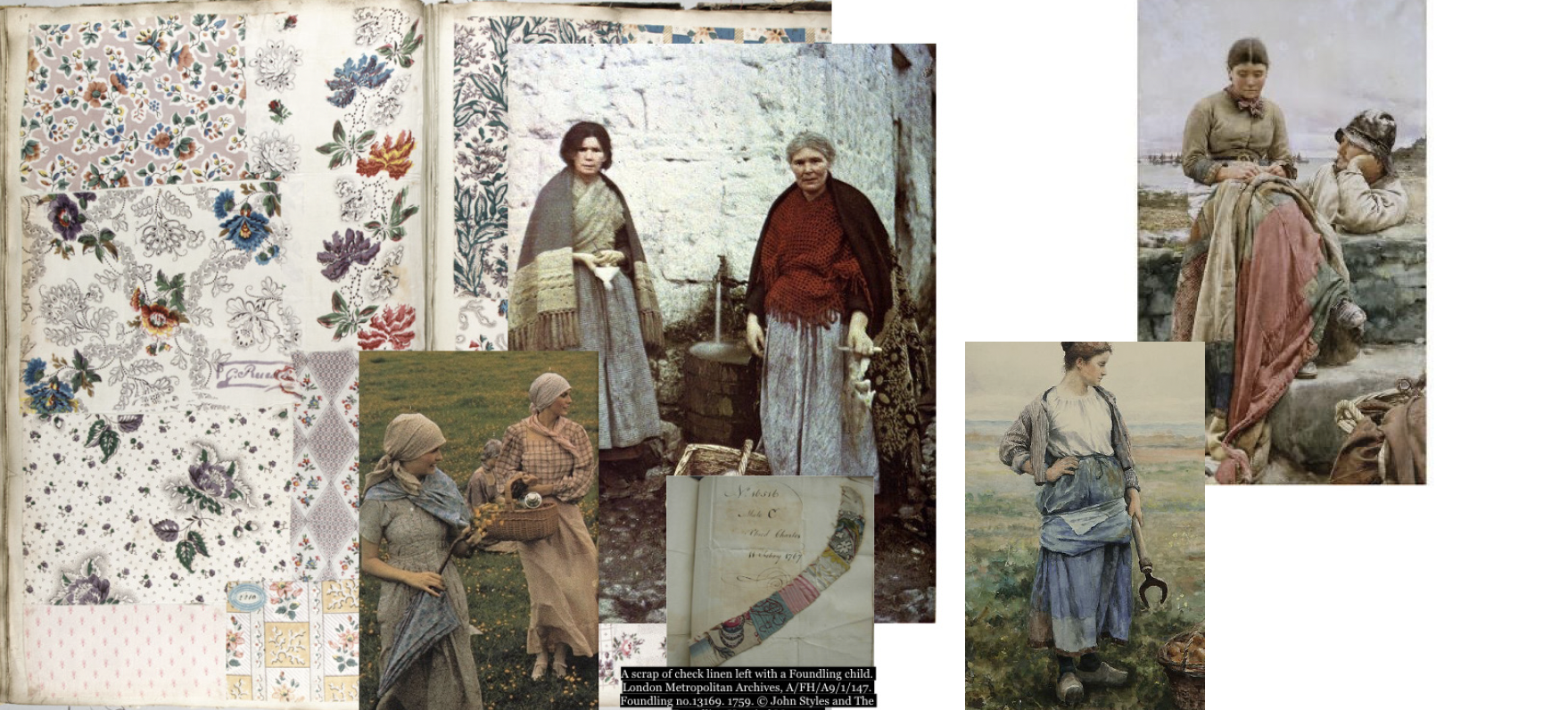

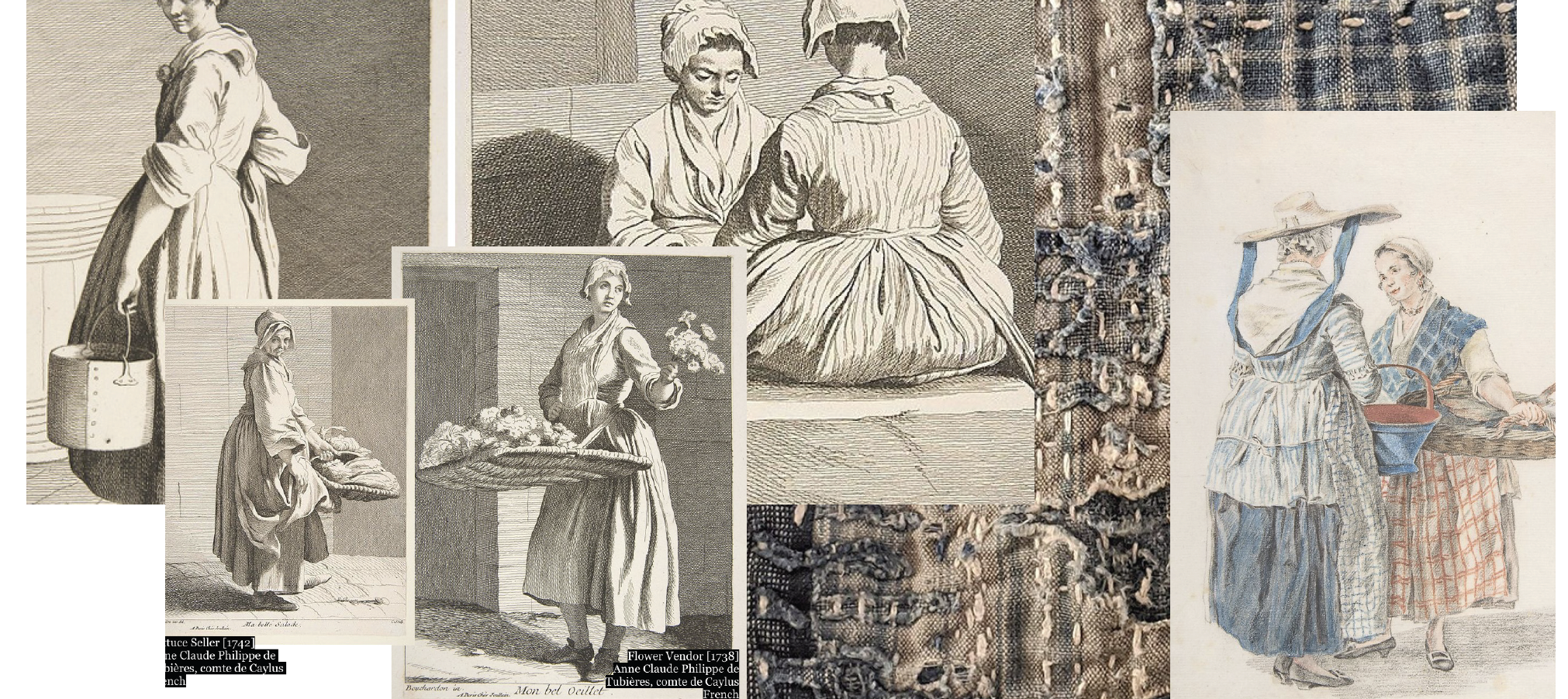
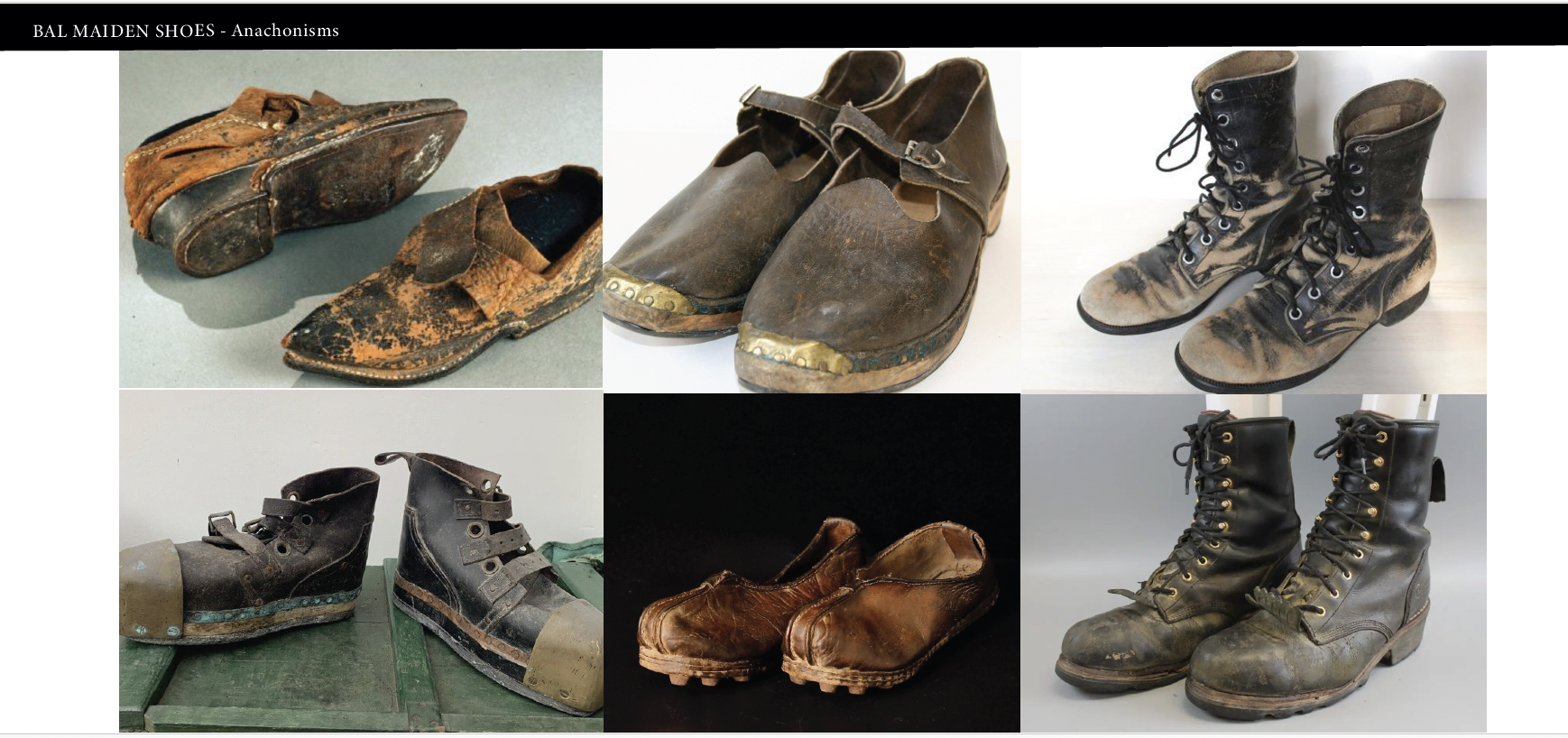
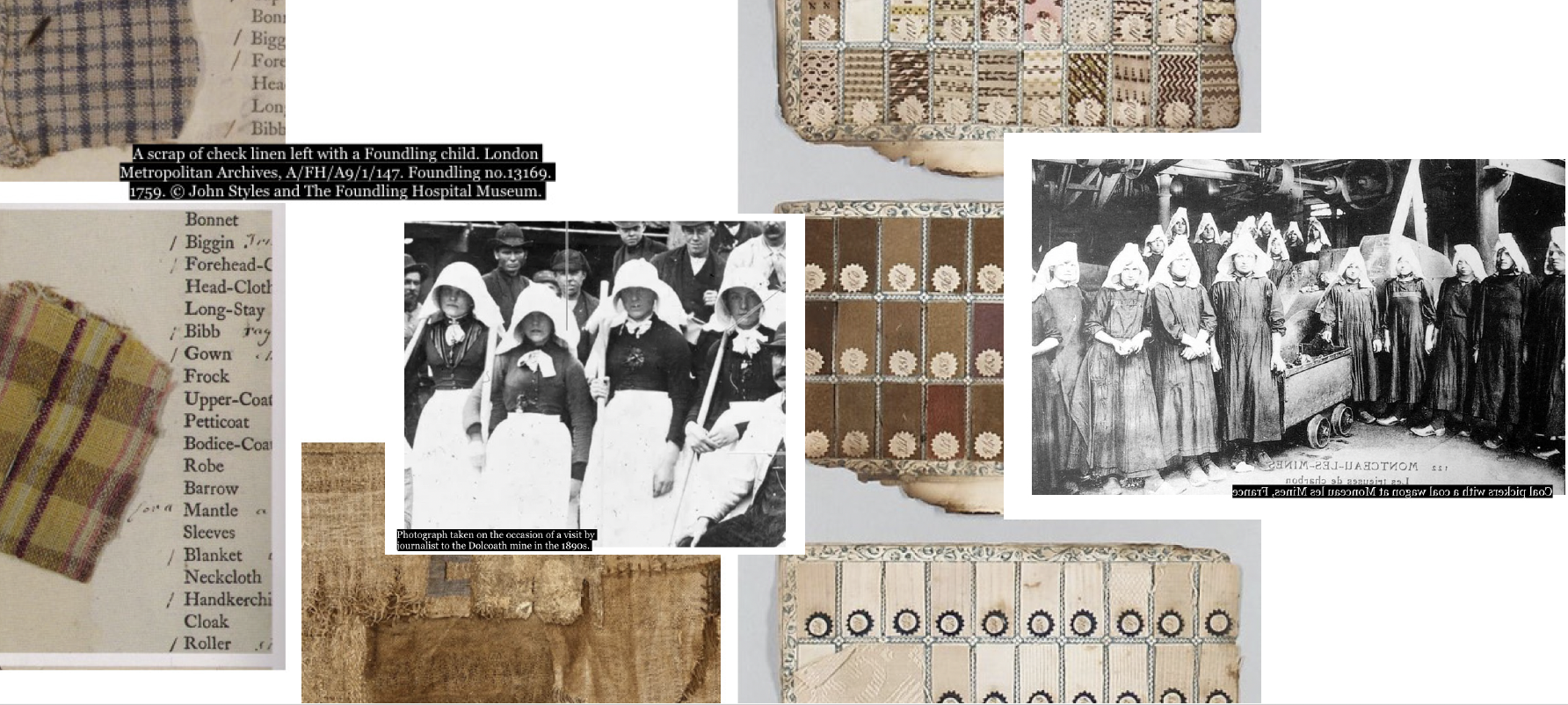
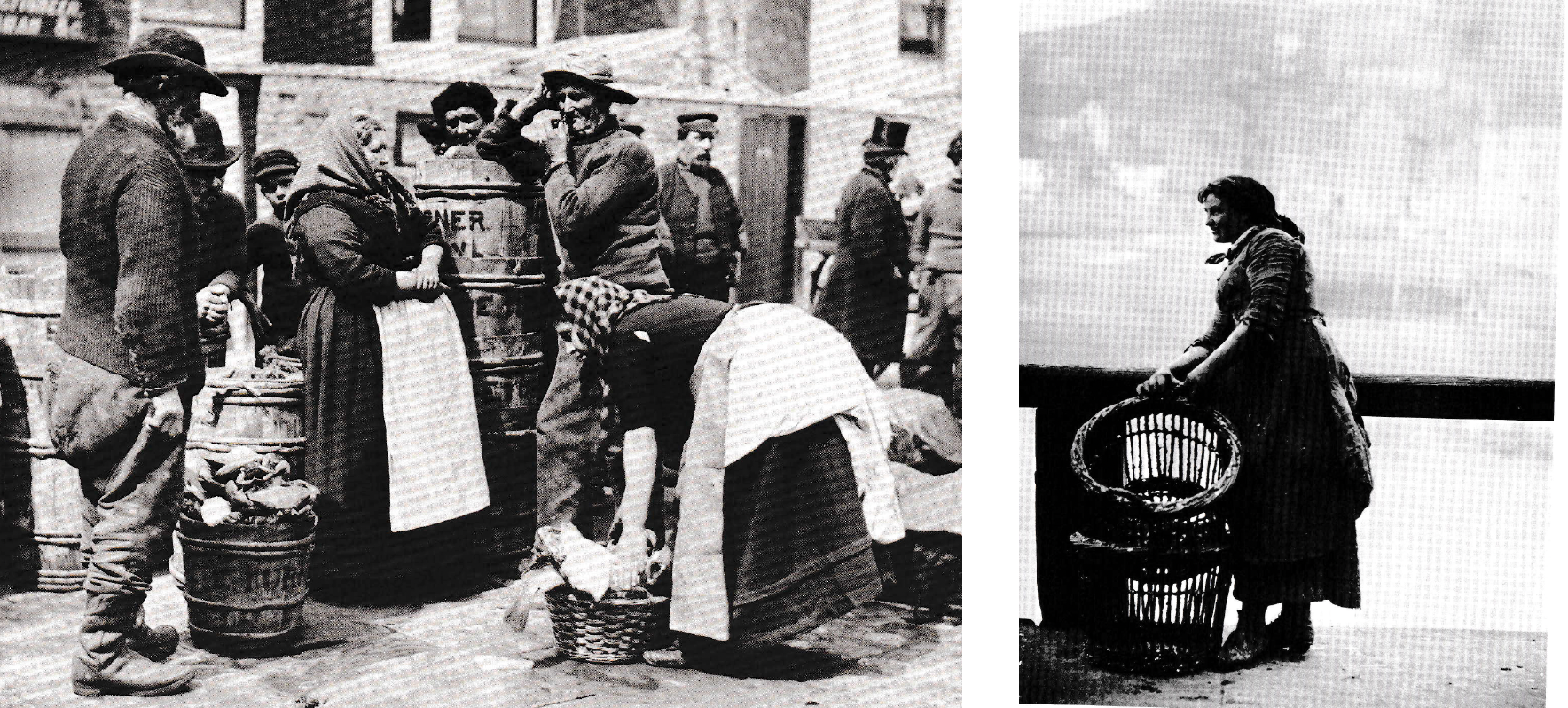
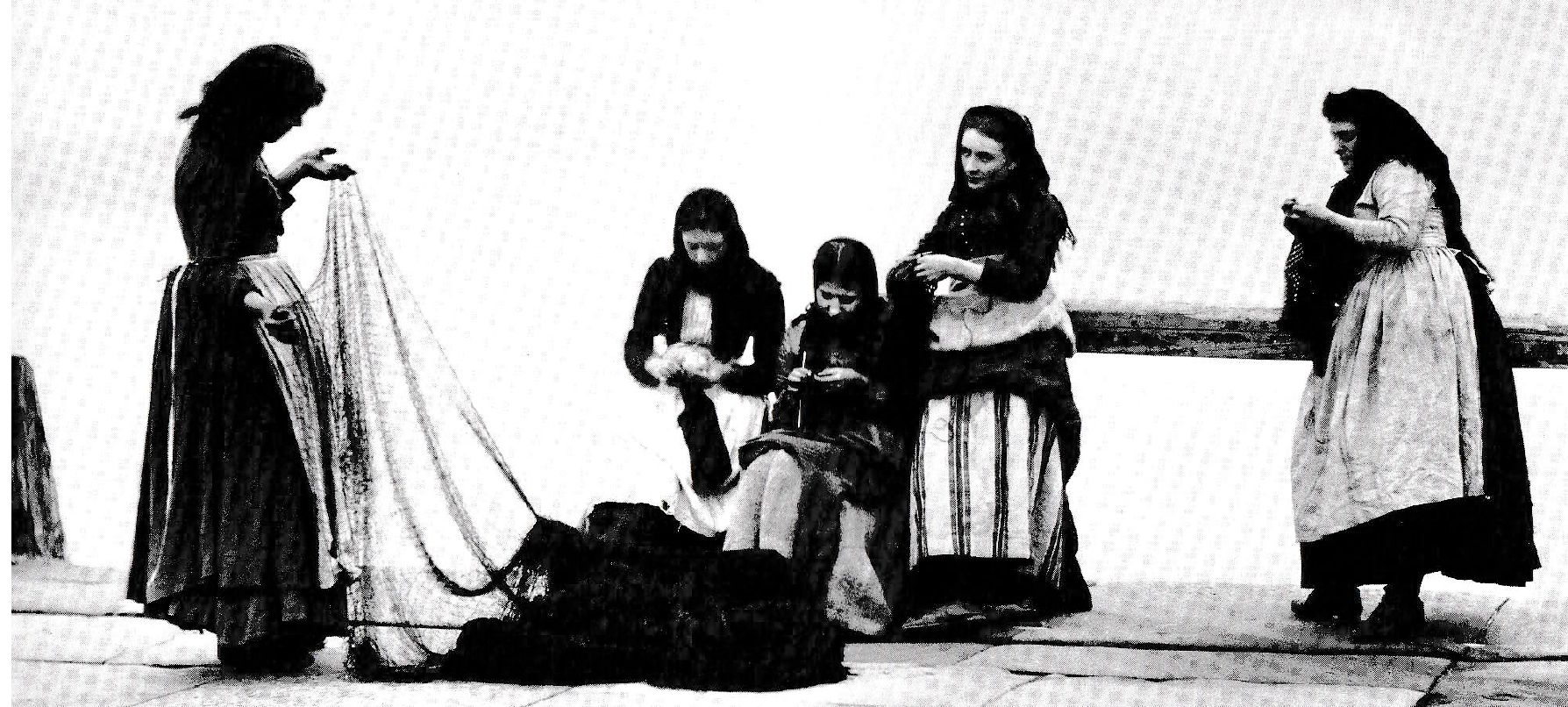
Research deck featuring historical references
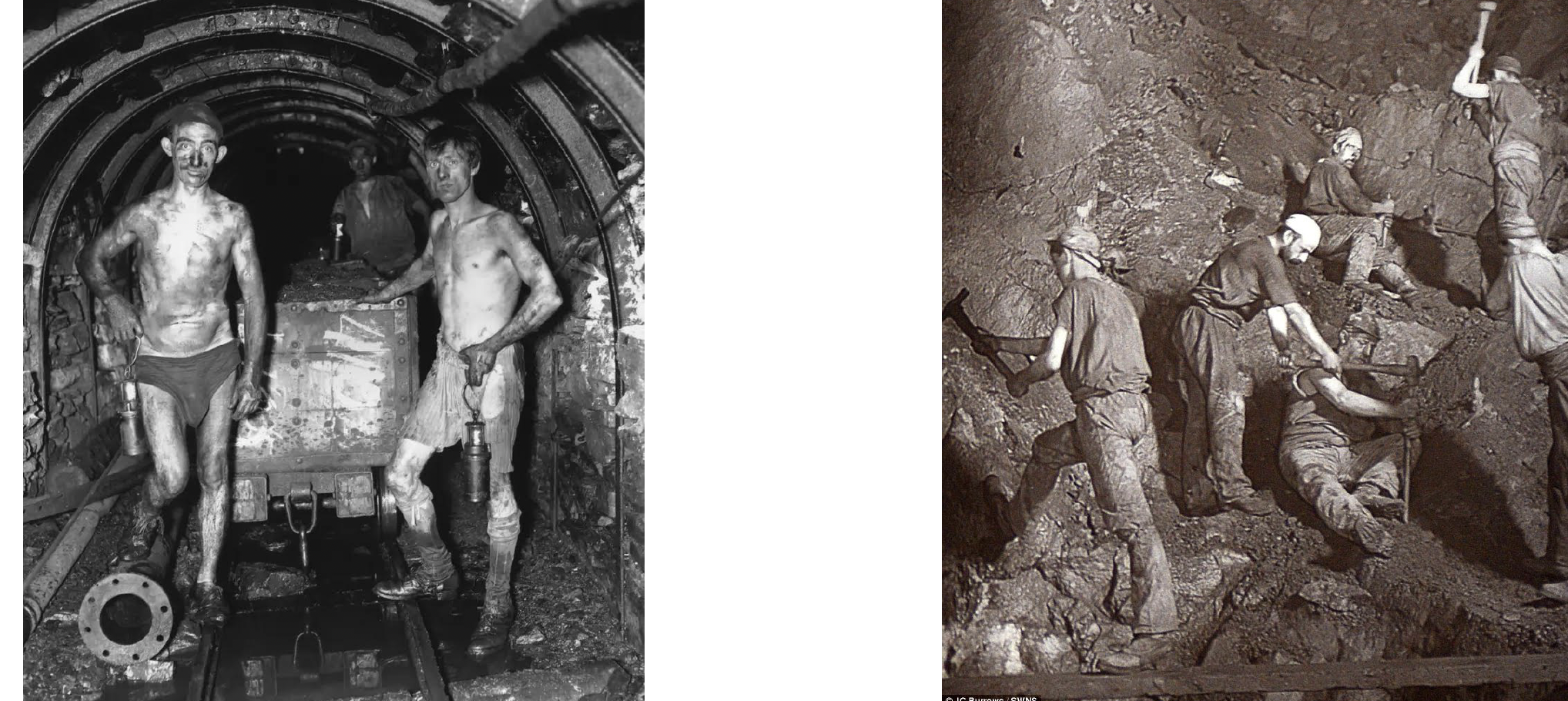
Bal Maidens began with research into the lives of women working in Cornwall’s mines during the eighteenth century, a subject with limited available visual references. The intention was to explore the relationship between clothing, labour and reuse as a practice that transcends historical periods. Considering the practical demands of physical work, I approached clothing as something that needed to be durable, repairable and made to last.
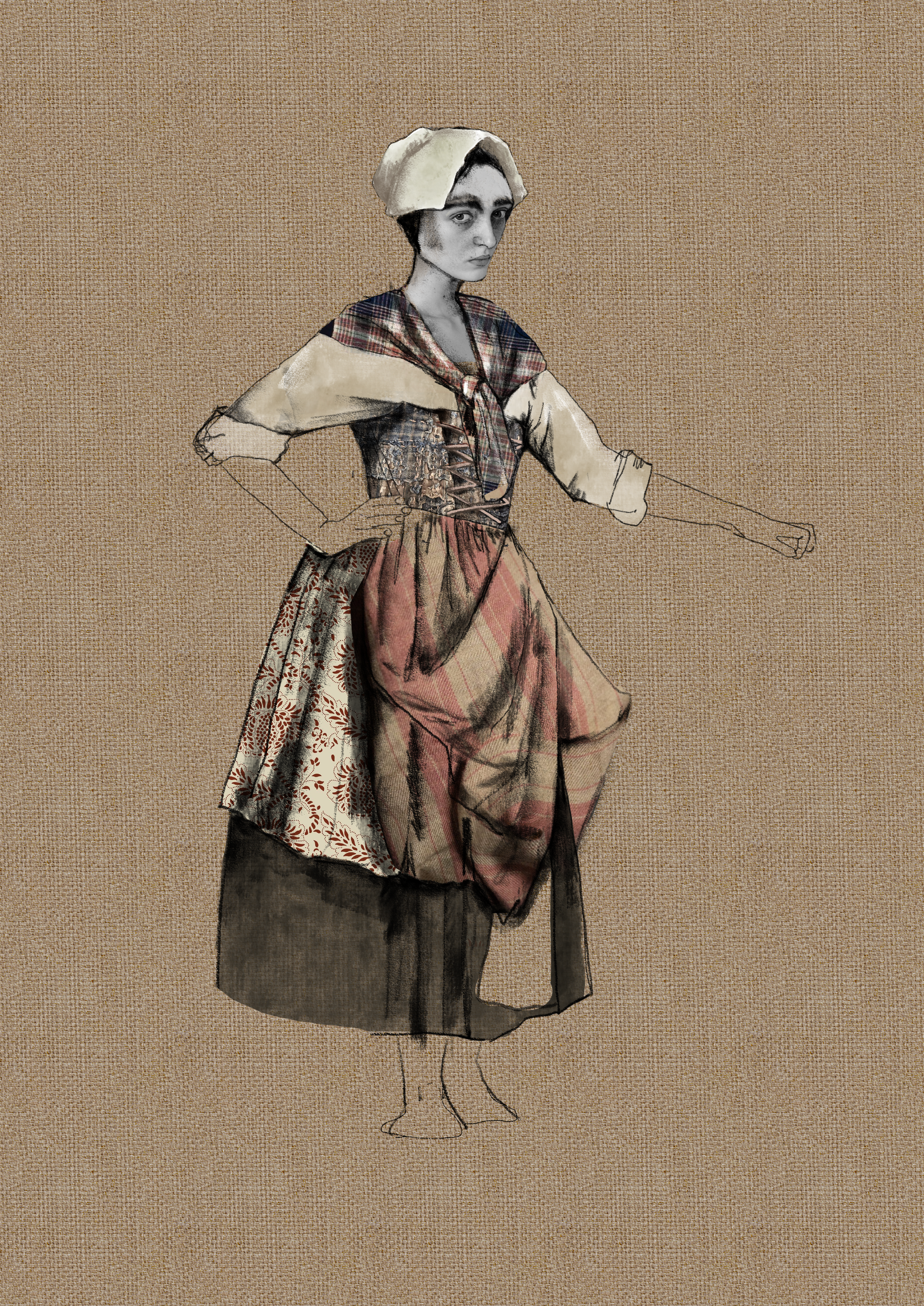
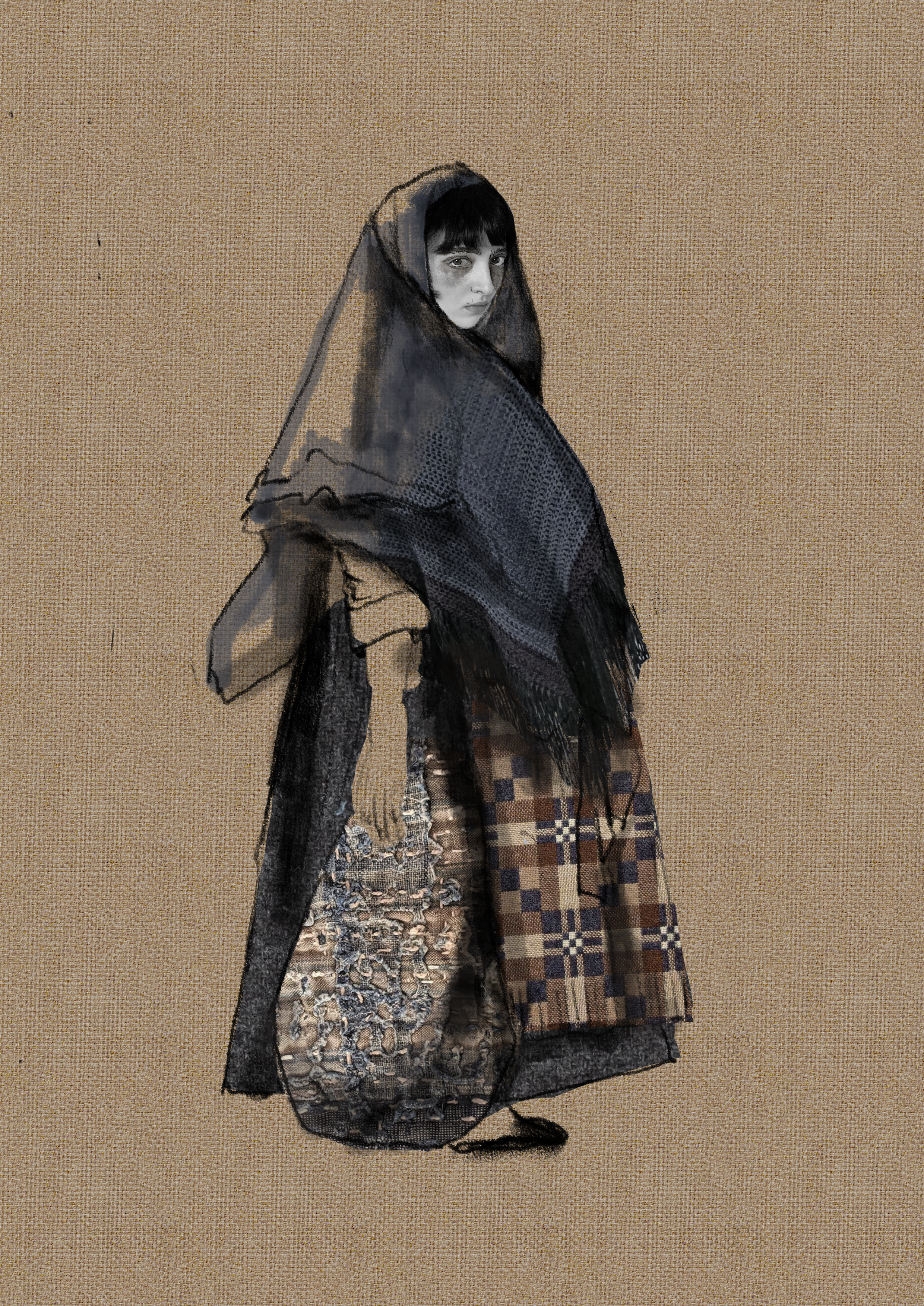
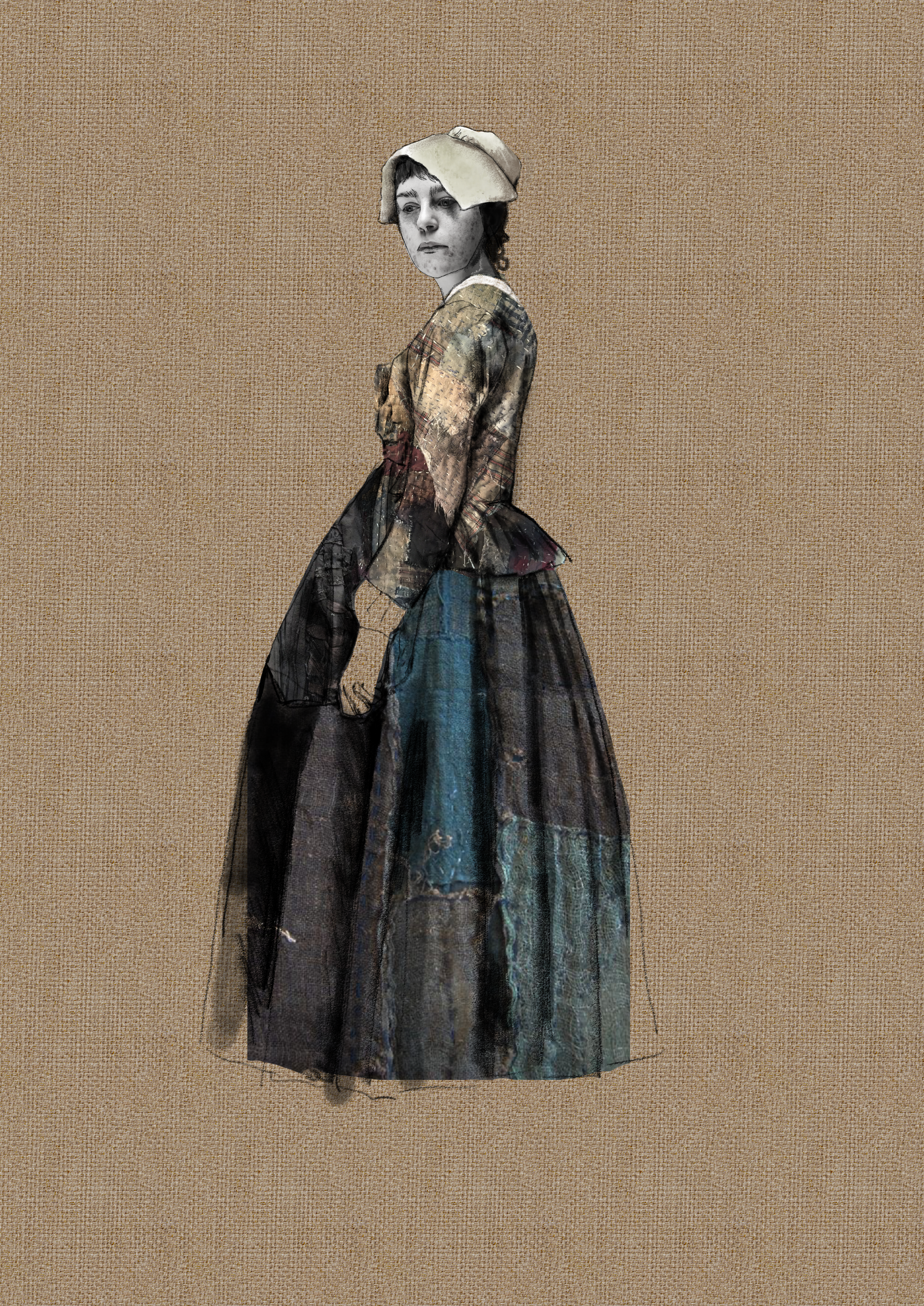
Costume character illustrations.
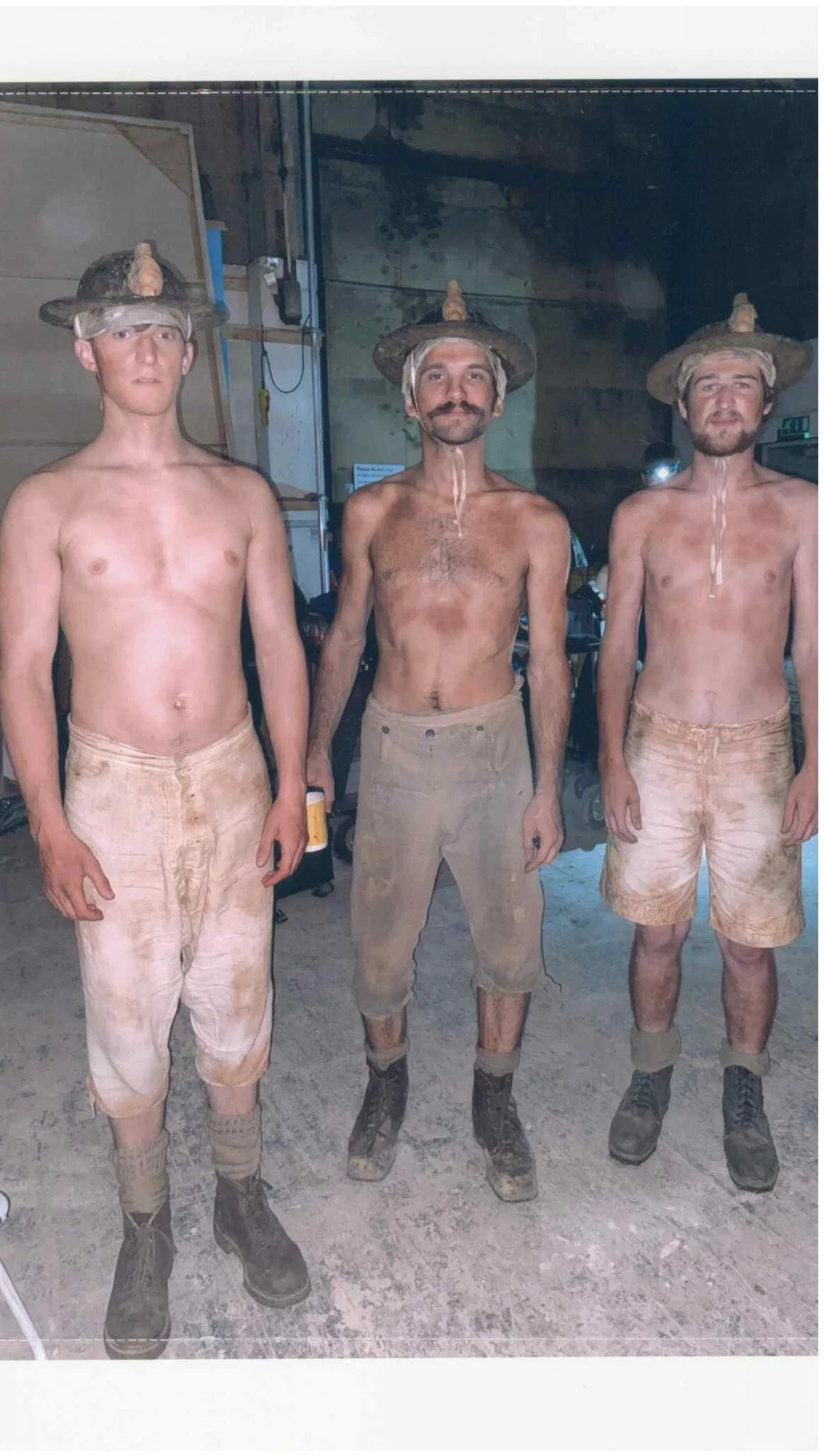
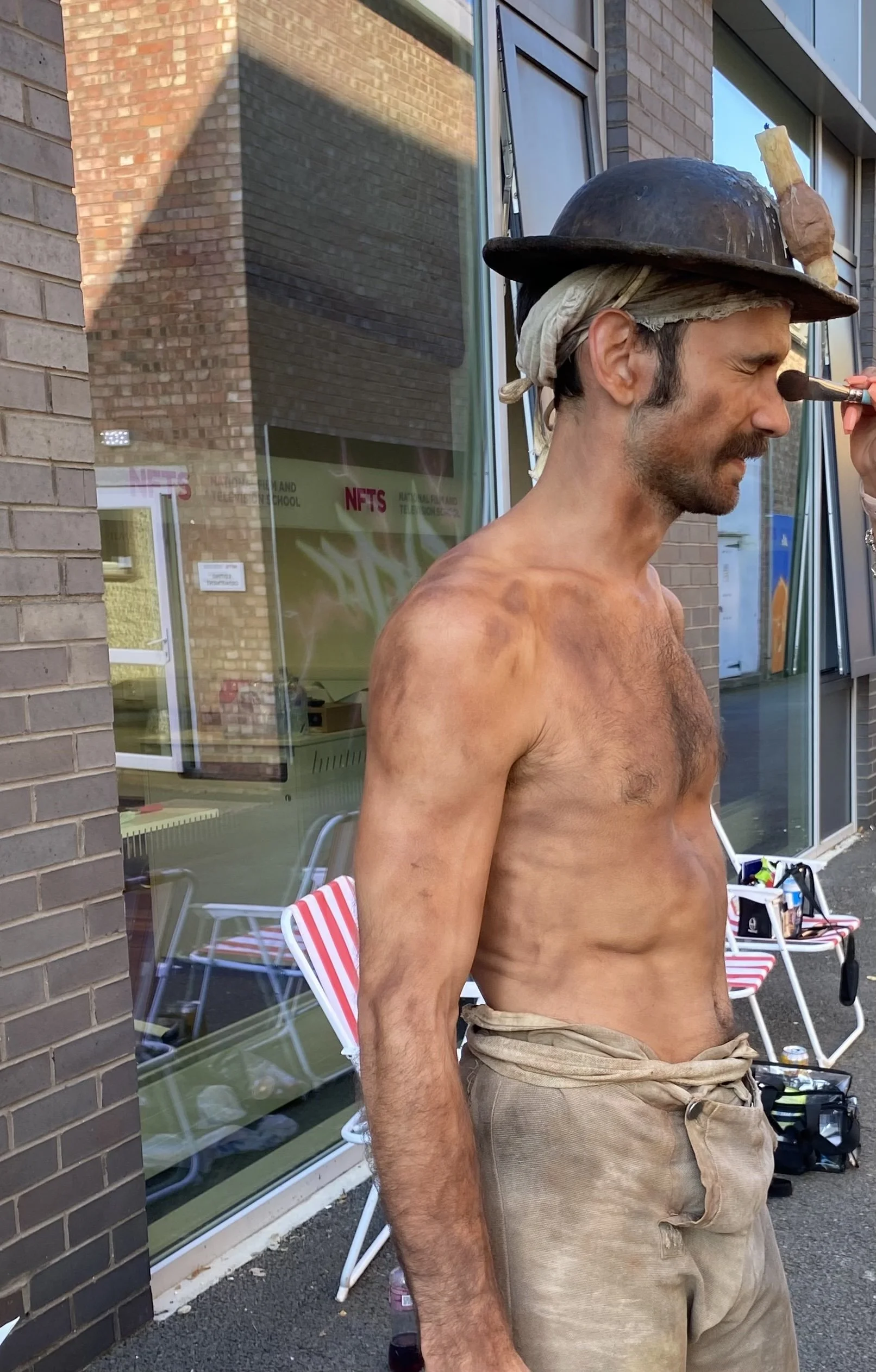
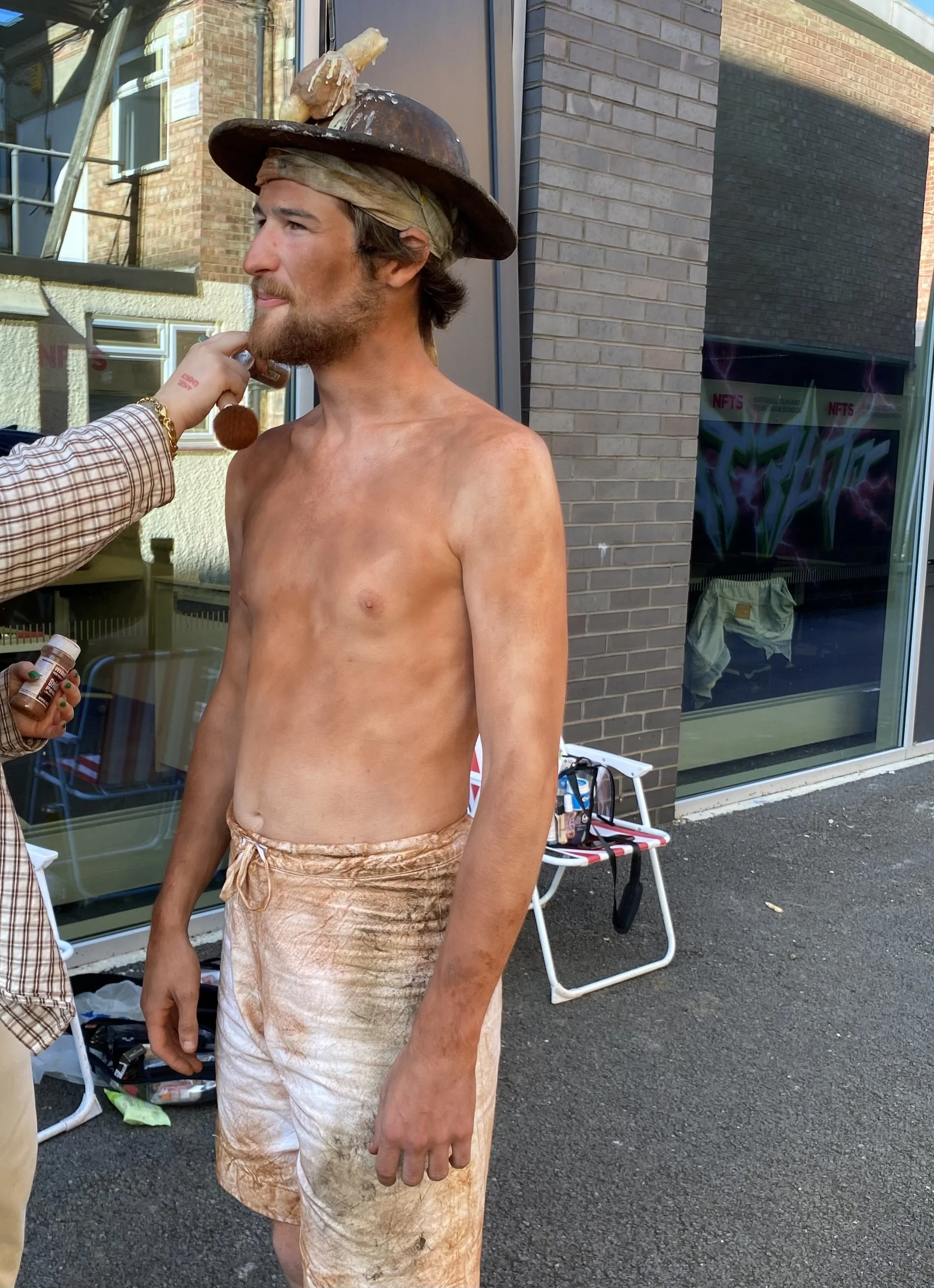
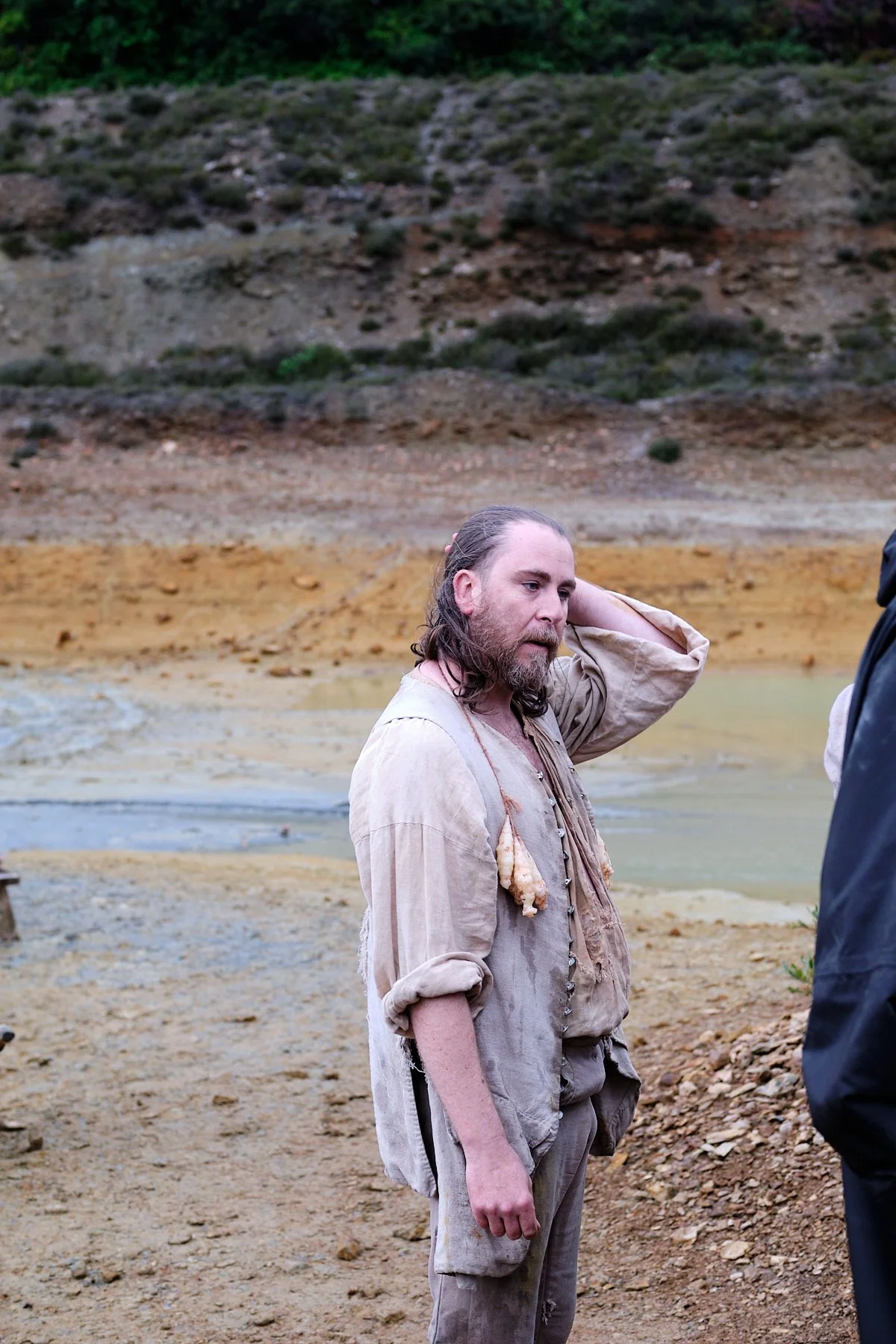
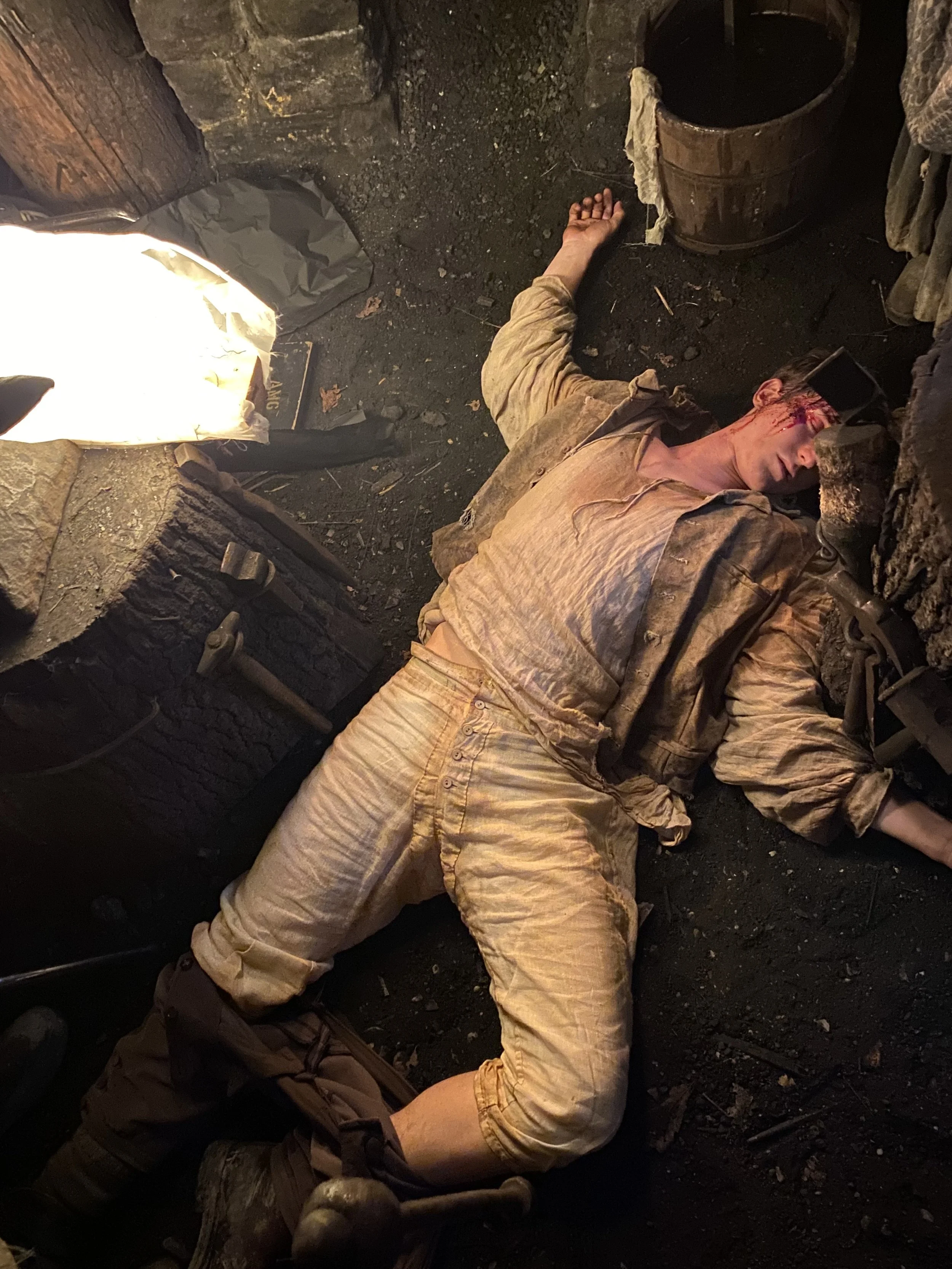
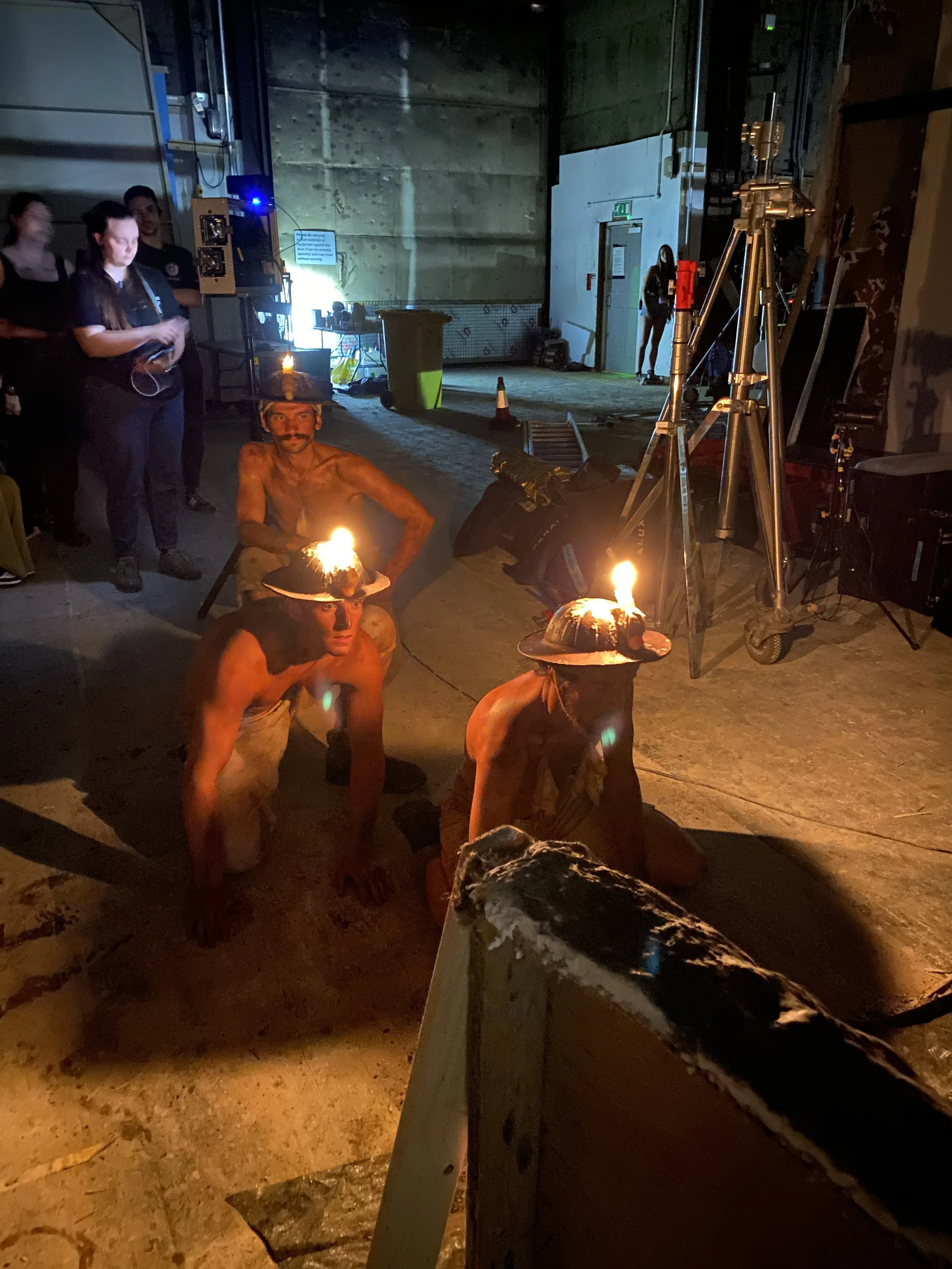
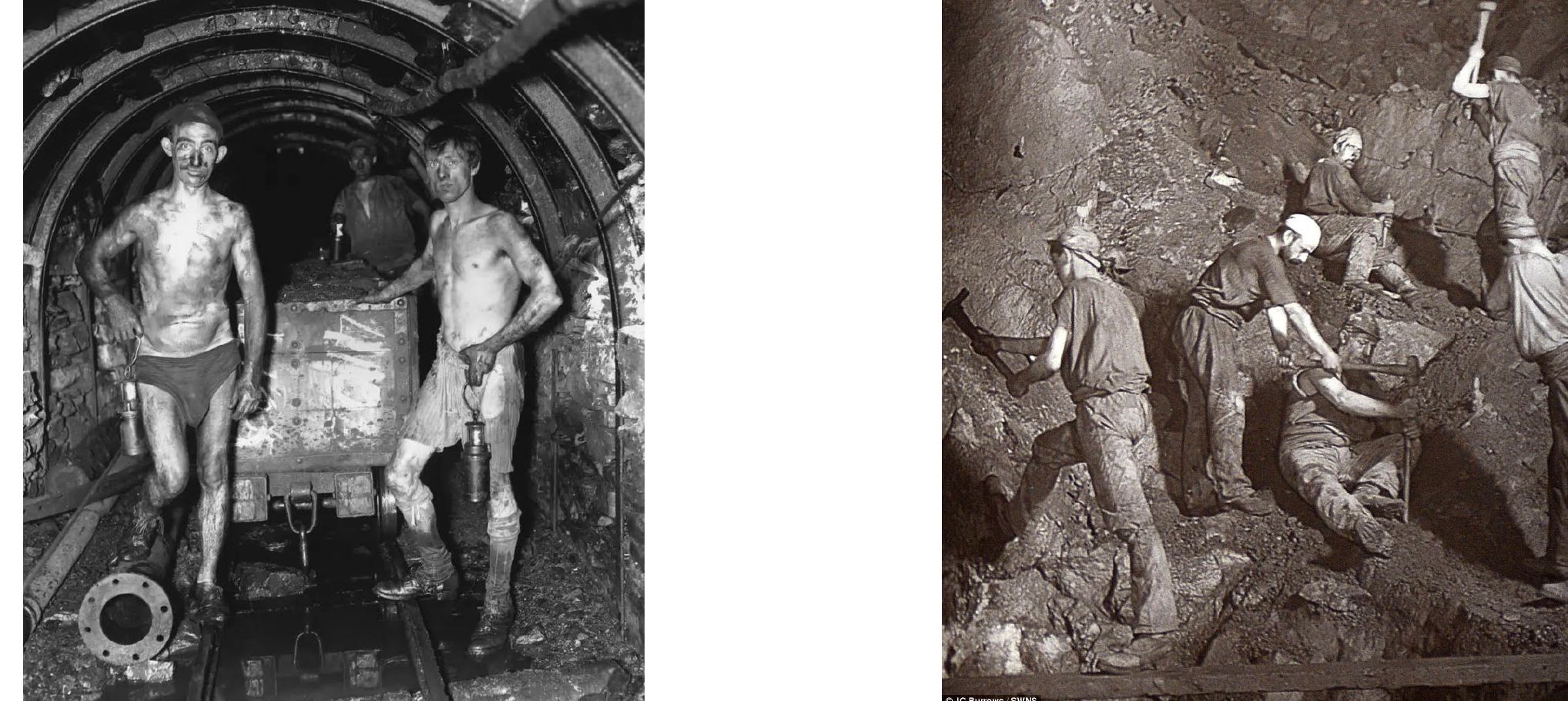
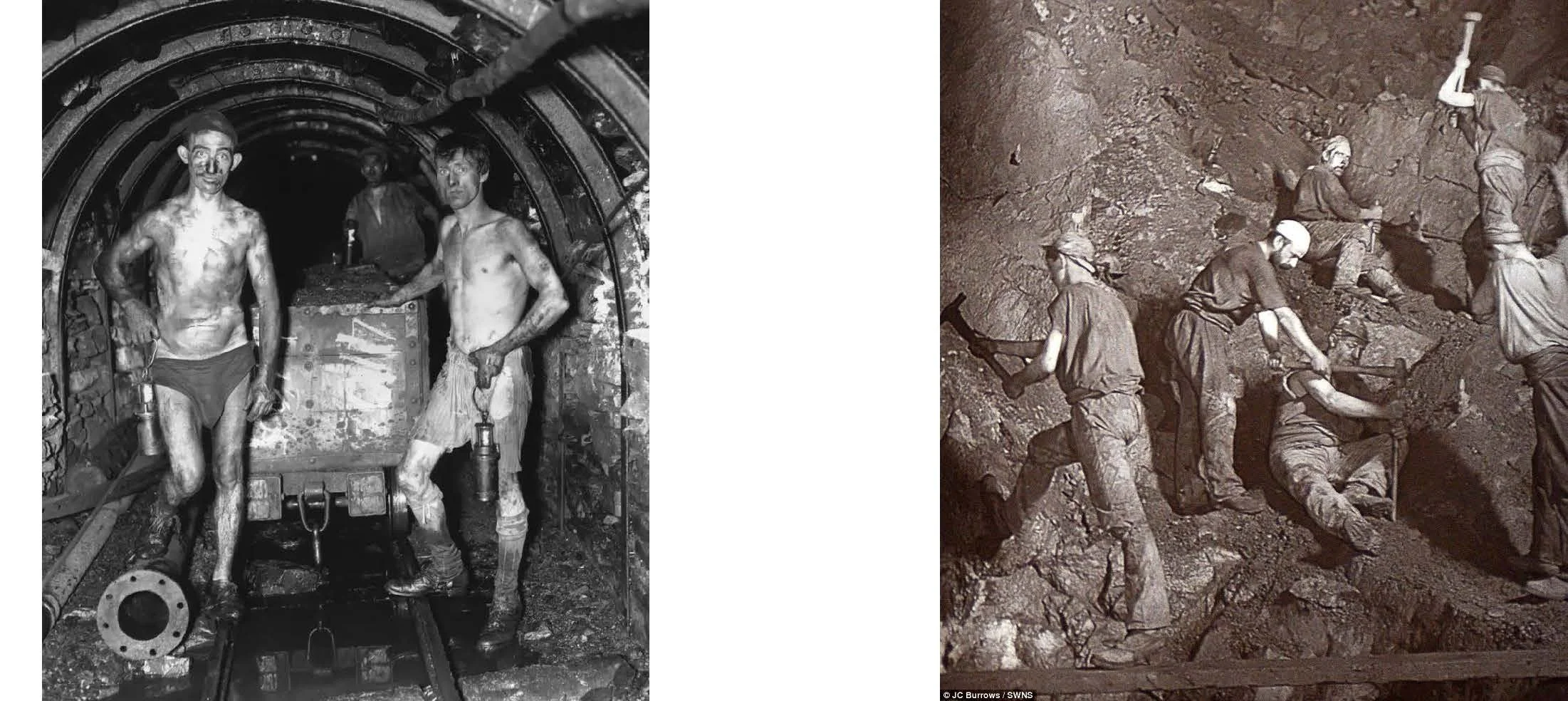
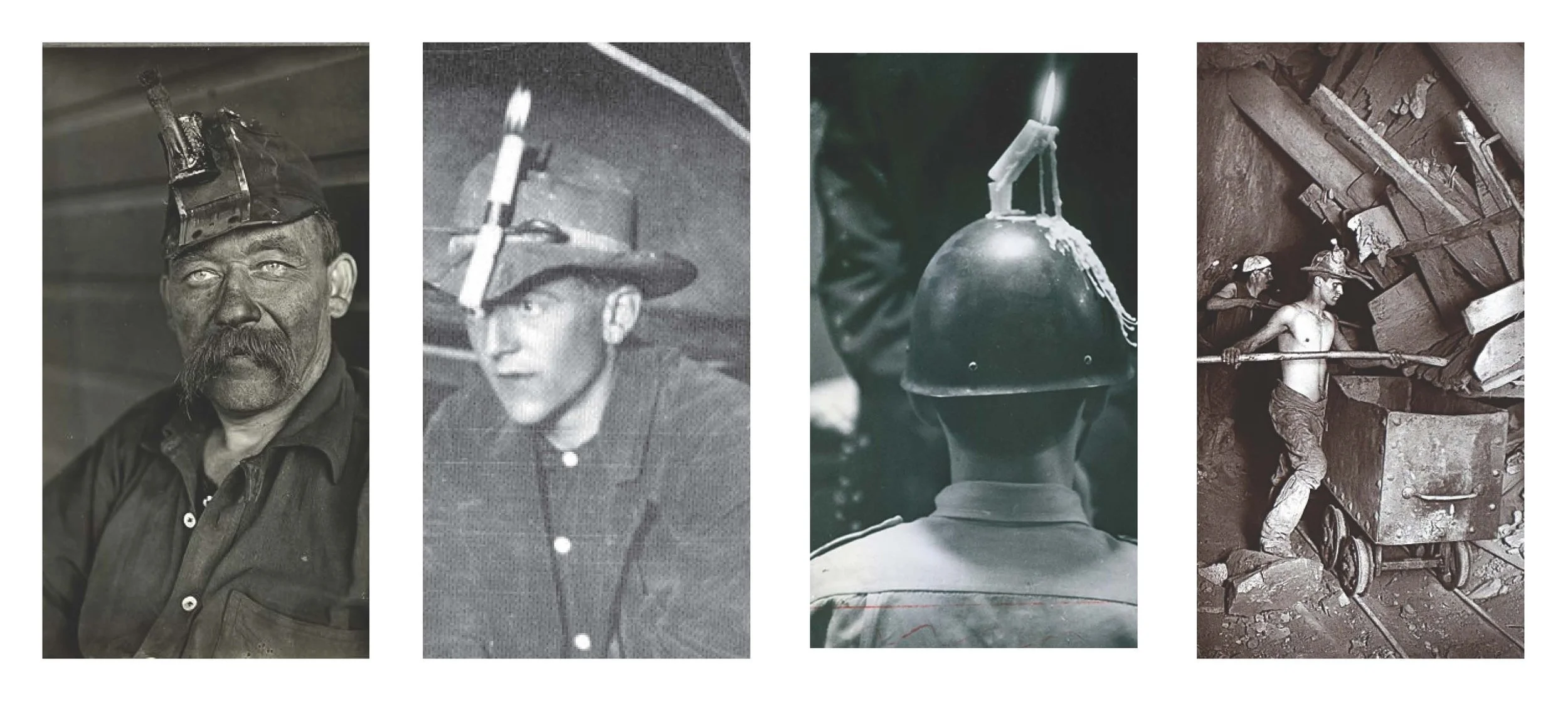
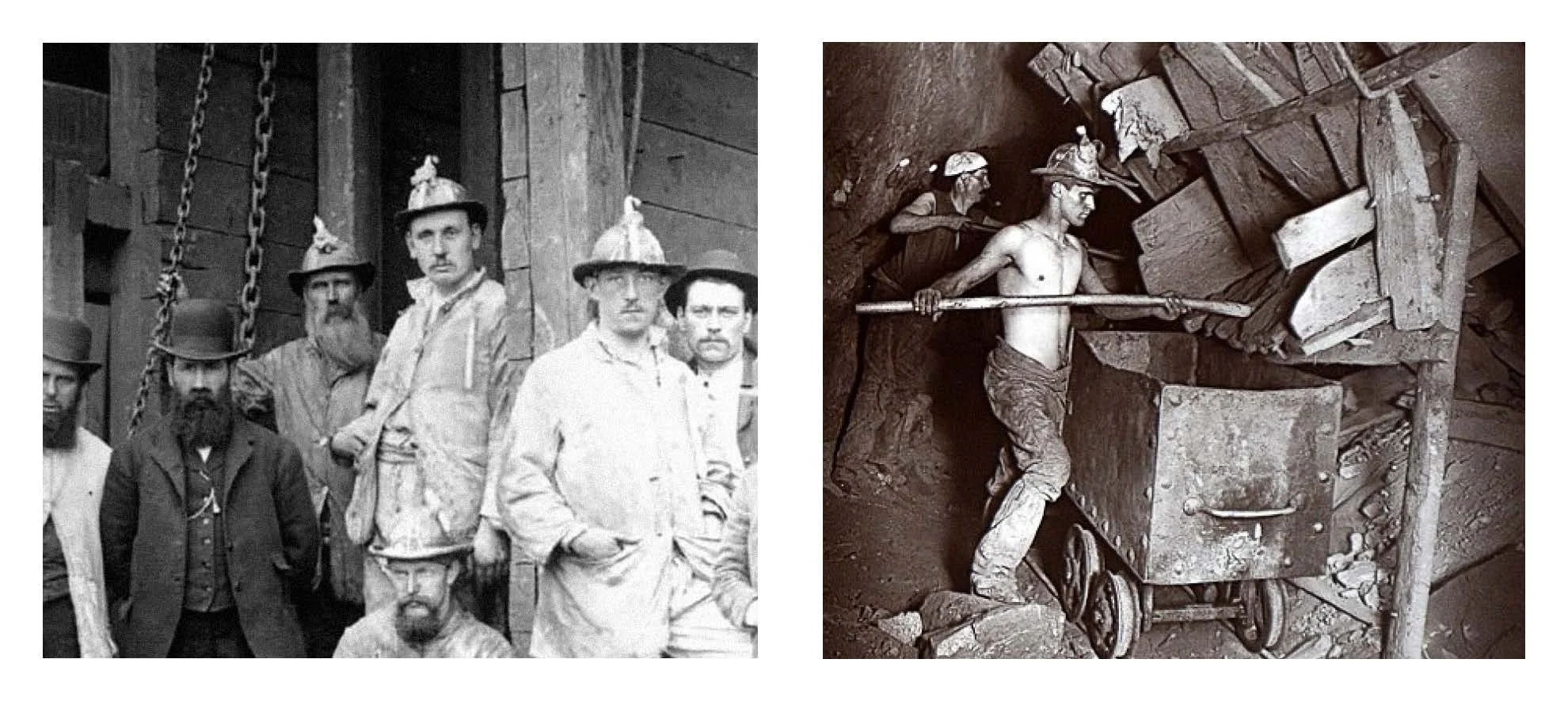
Research deck featuring historical mining references


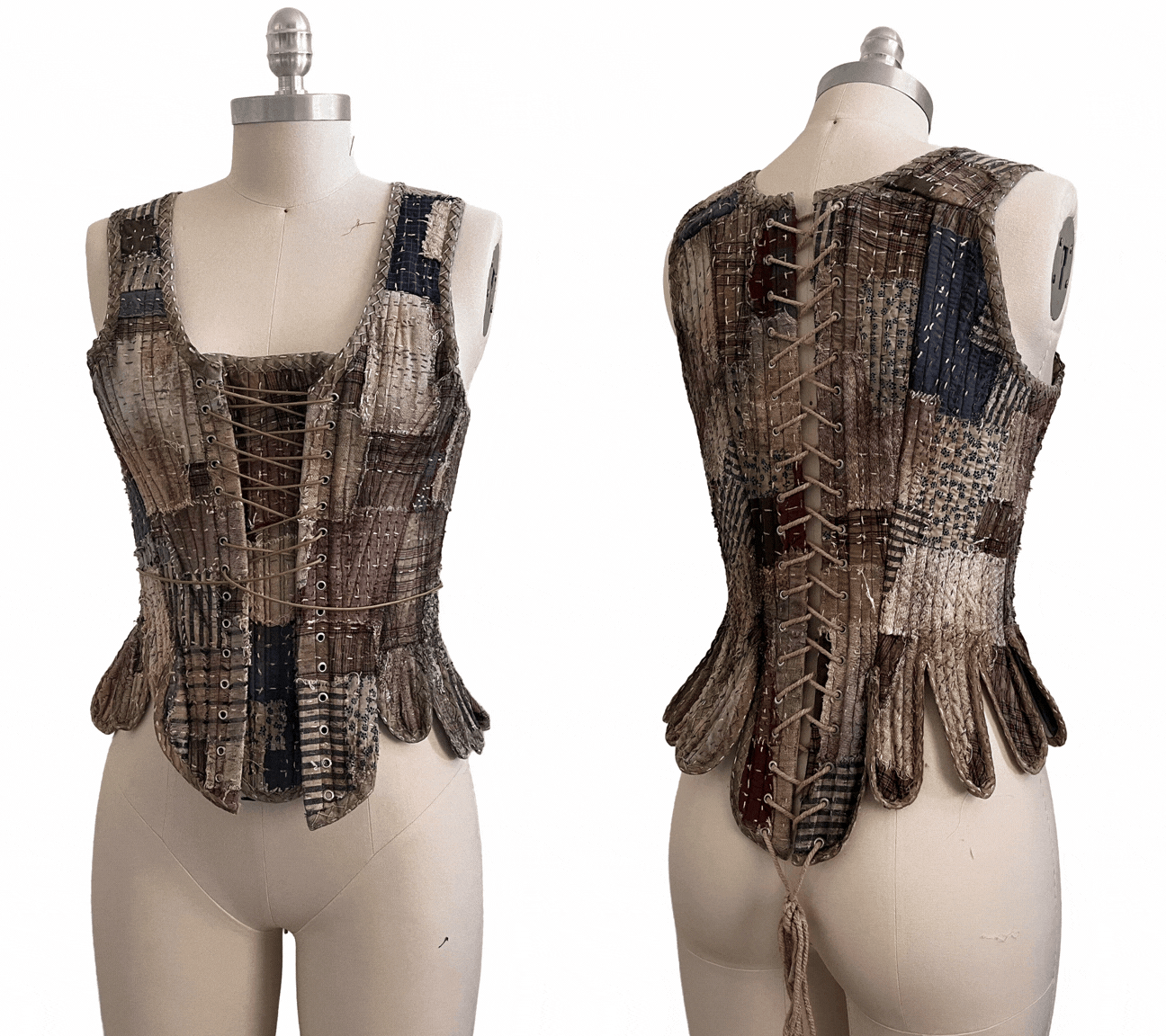
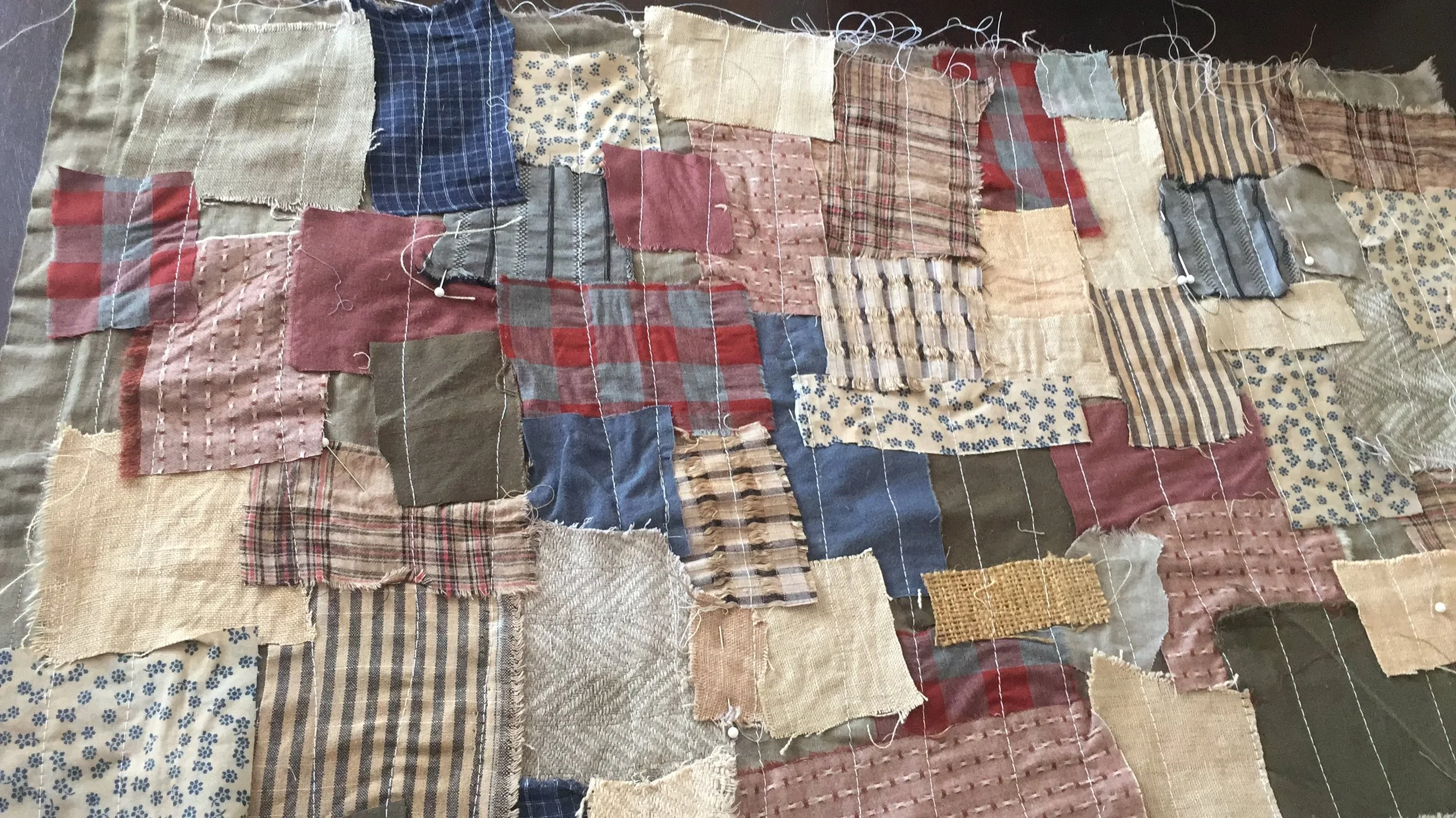
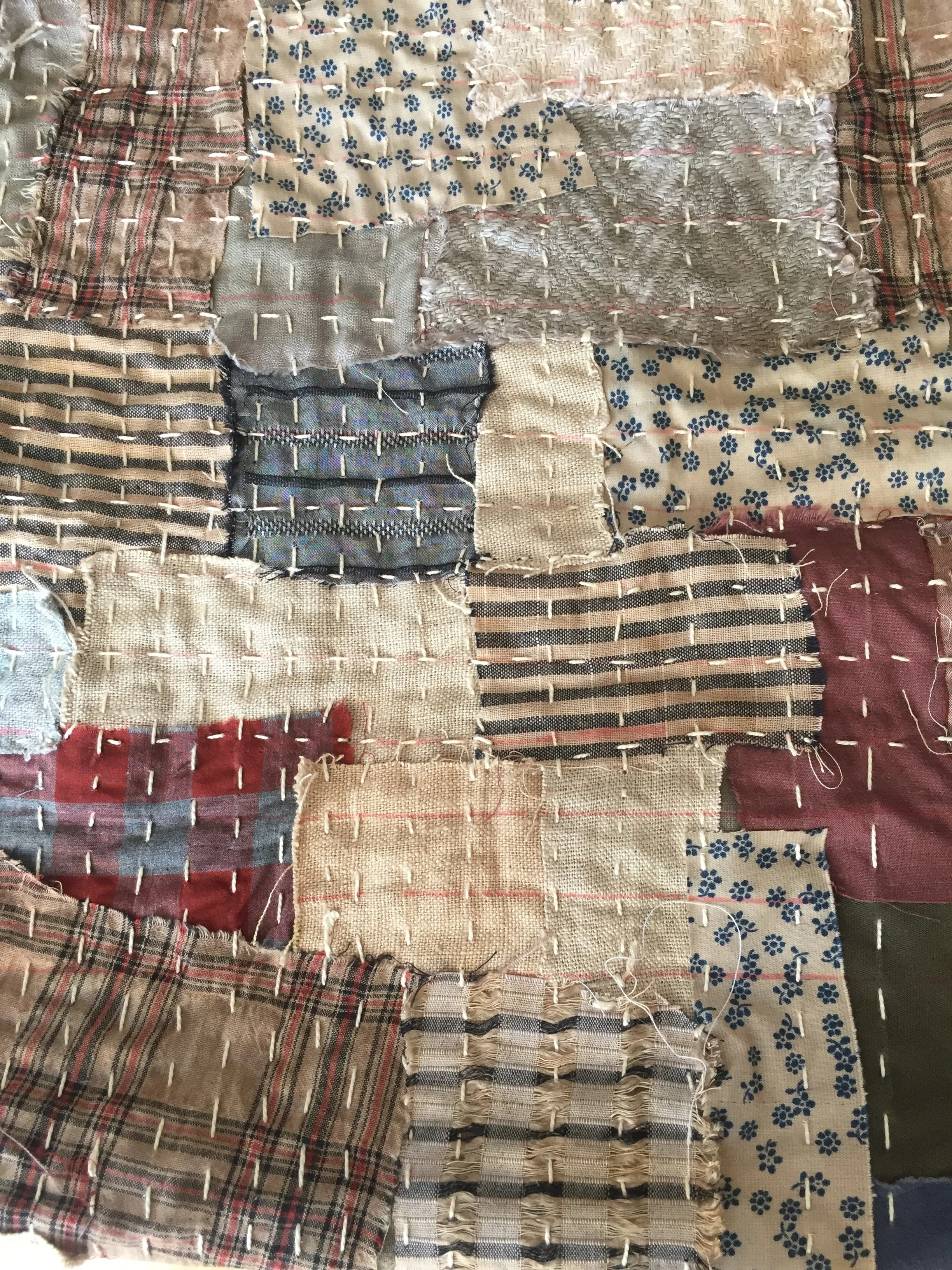
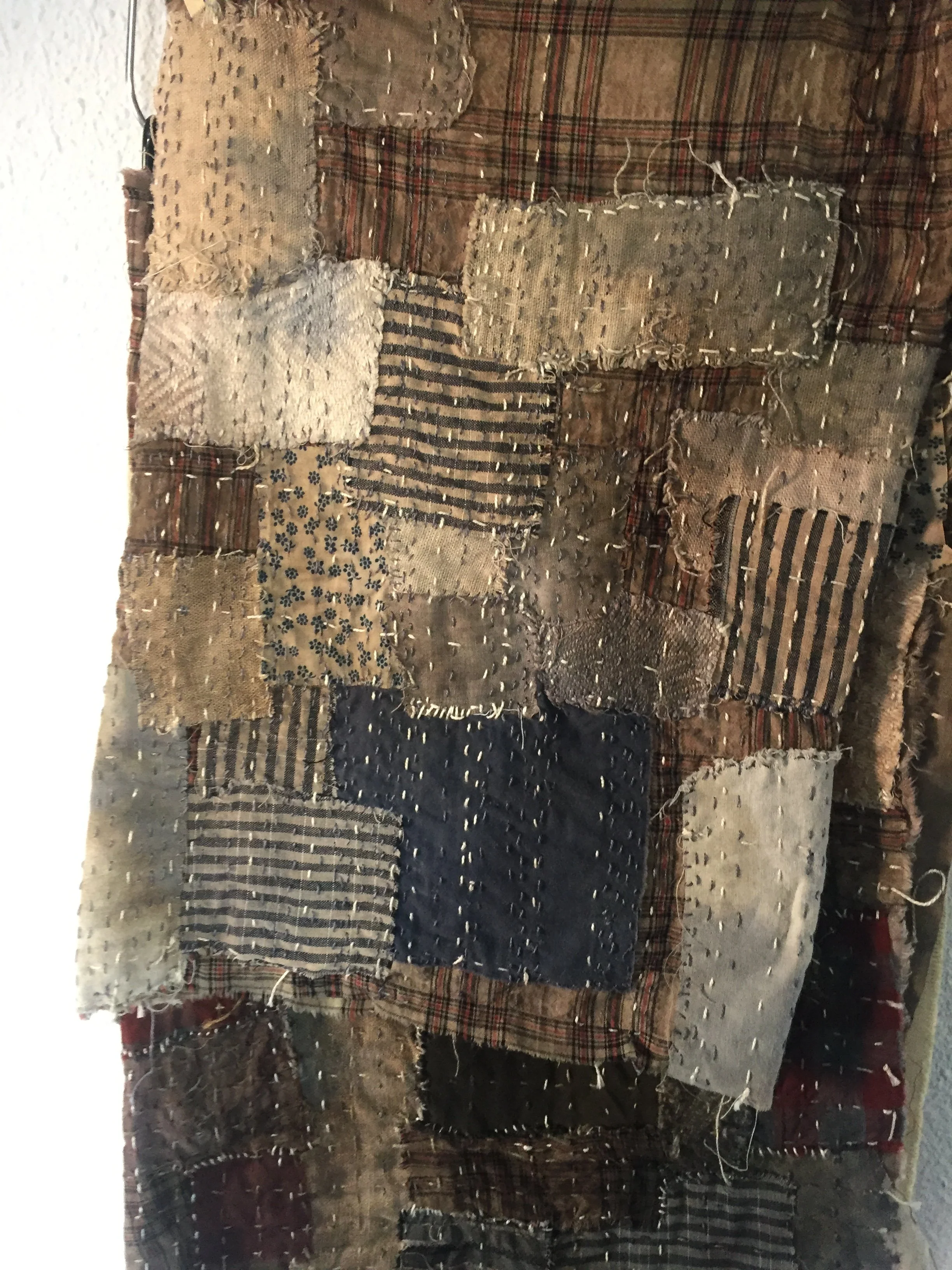
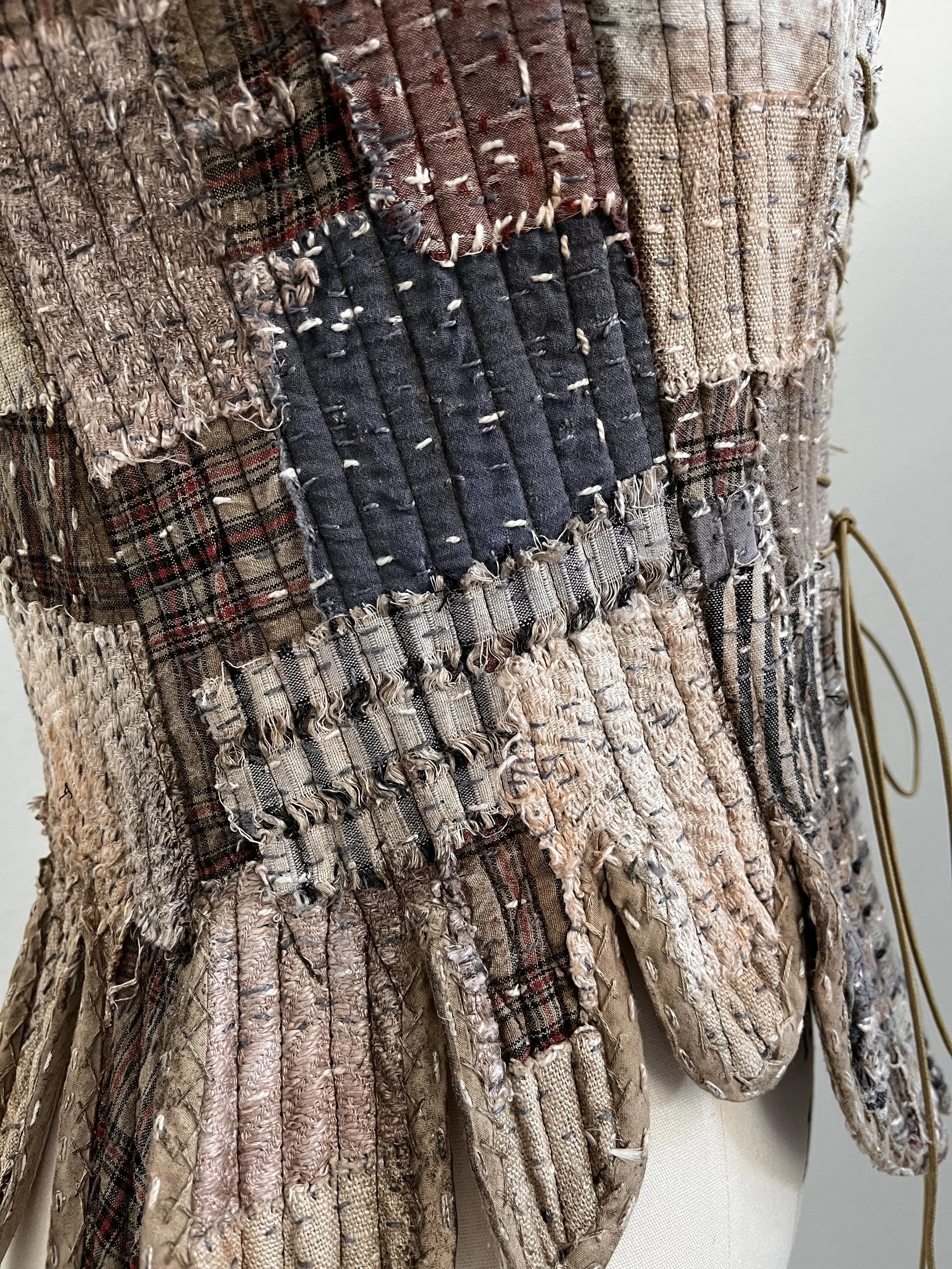
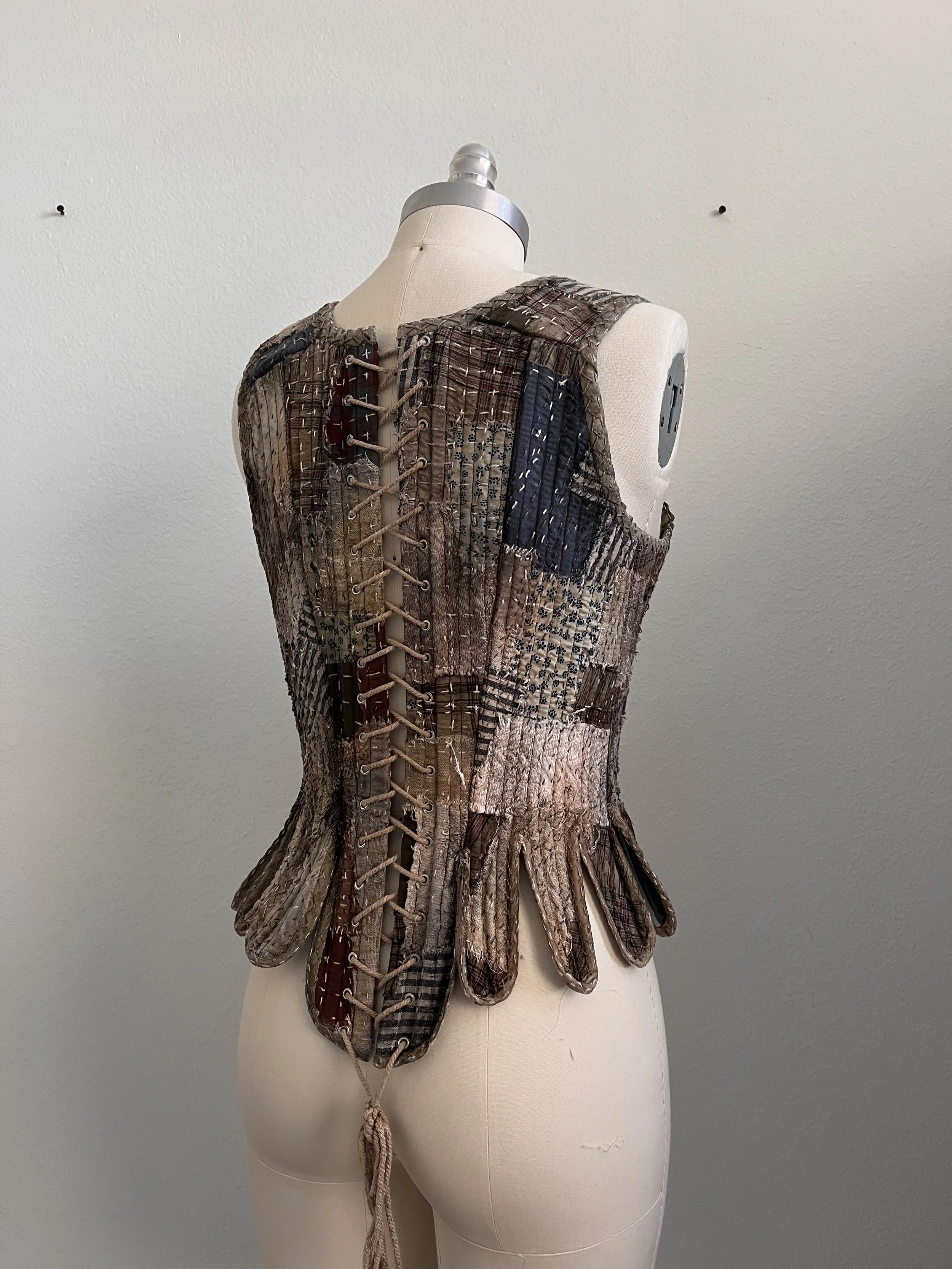
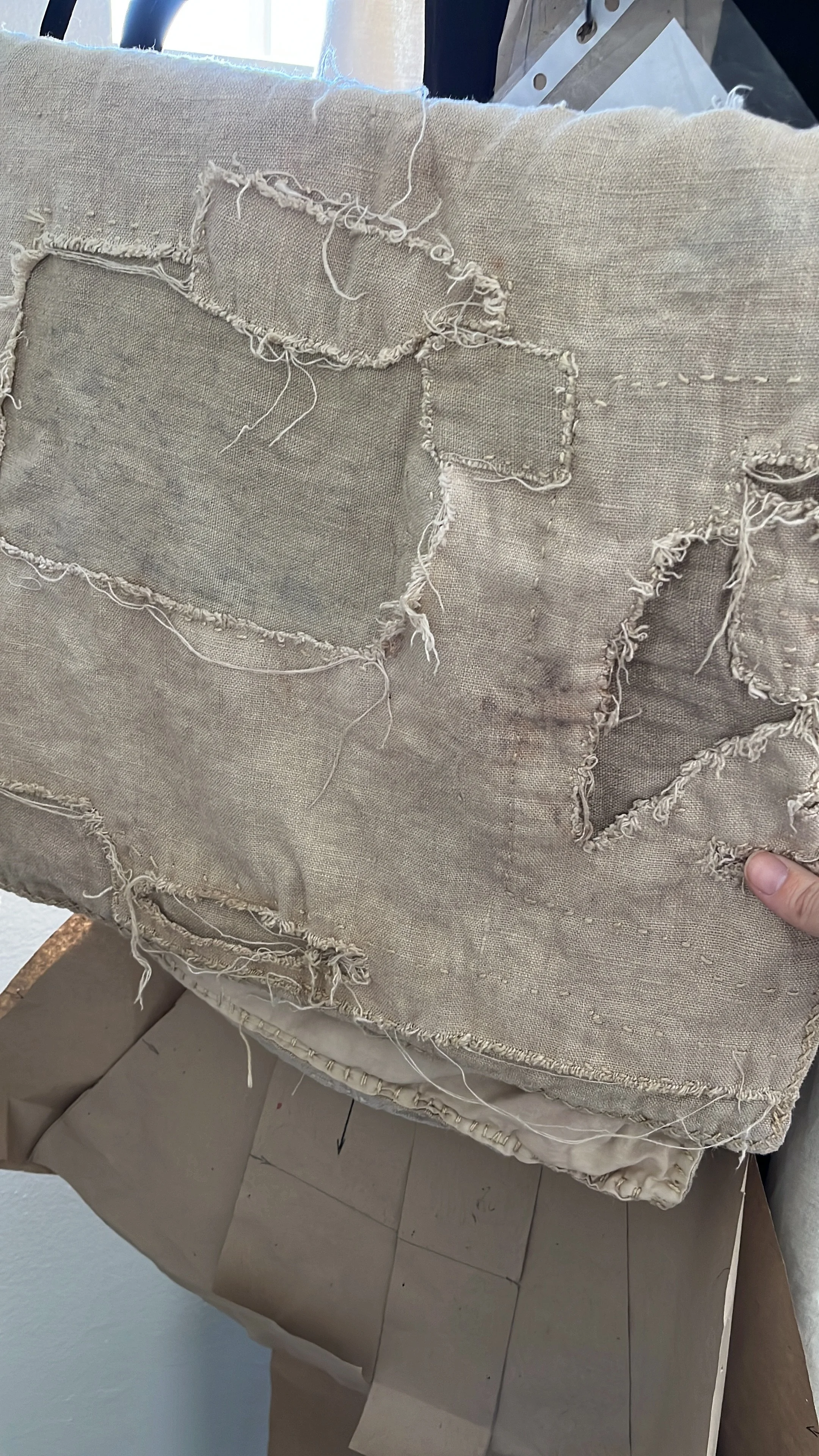
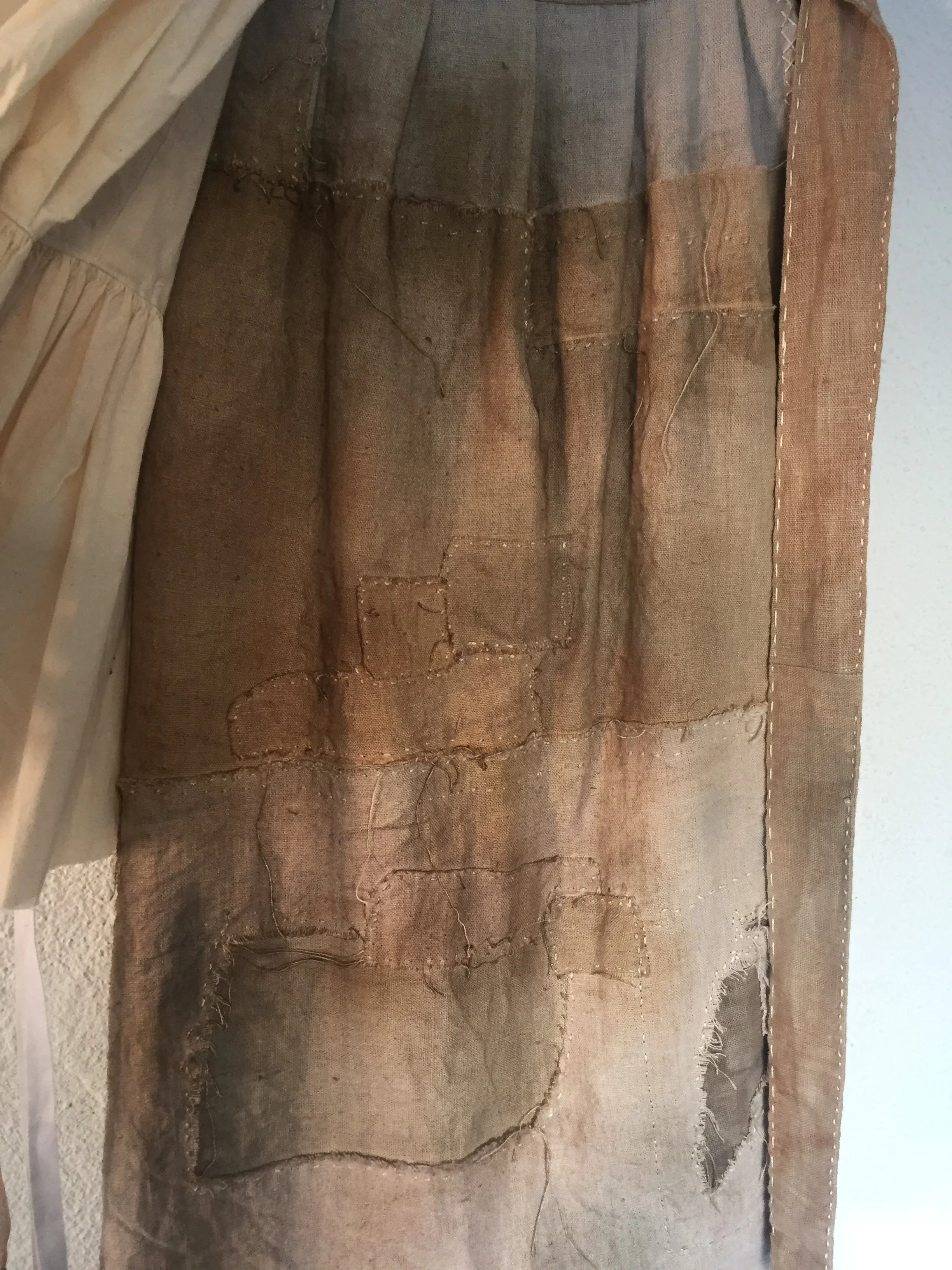
Drawing inspiration from Japanese boro patchwork and archival fabric scraps from the period, I recycled and dyed scraps using natural dyes made from kitchen waste, including cabbage, onion skins and avocado stones, alongside experiments with copper.
These tests allowed me to explore the range of colours achievable through the process. I then assembled the scraps into a larger fabric panel and used it to cut a corset based on a historical pattern from the 1780s.
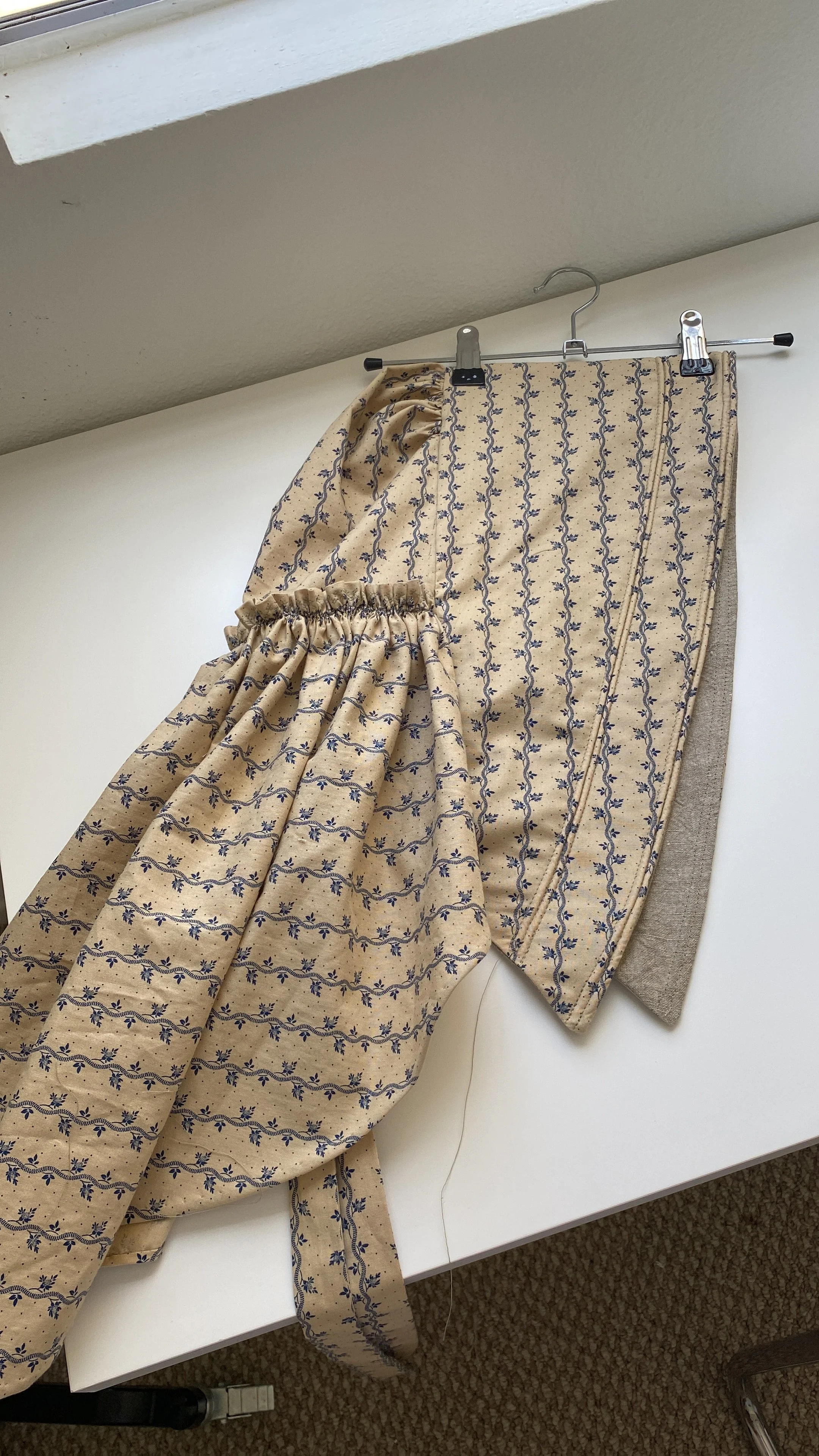
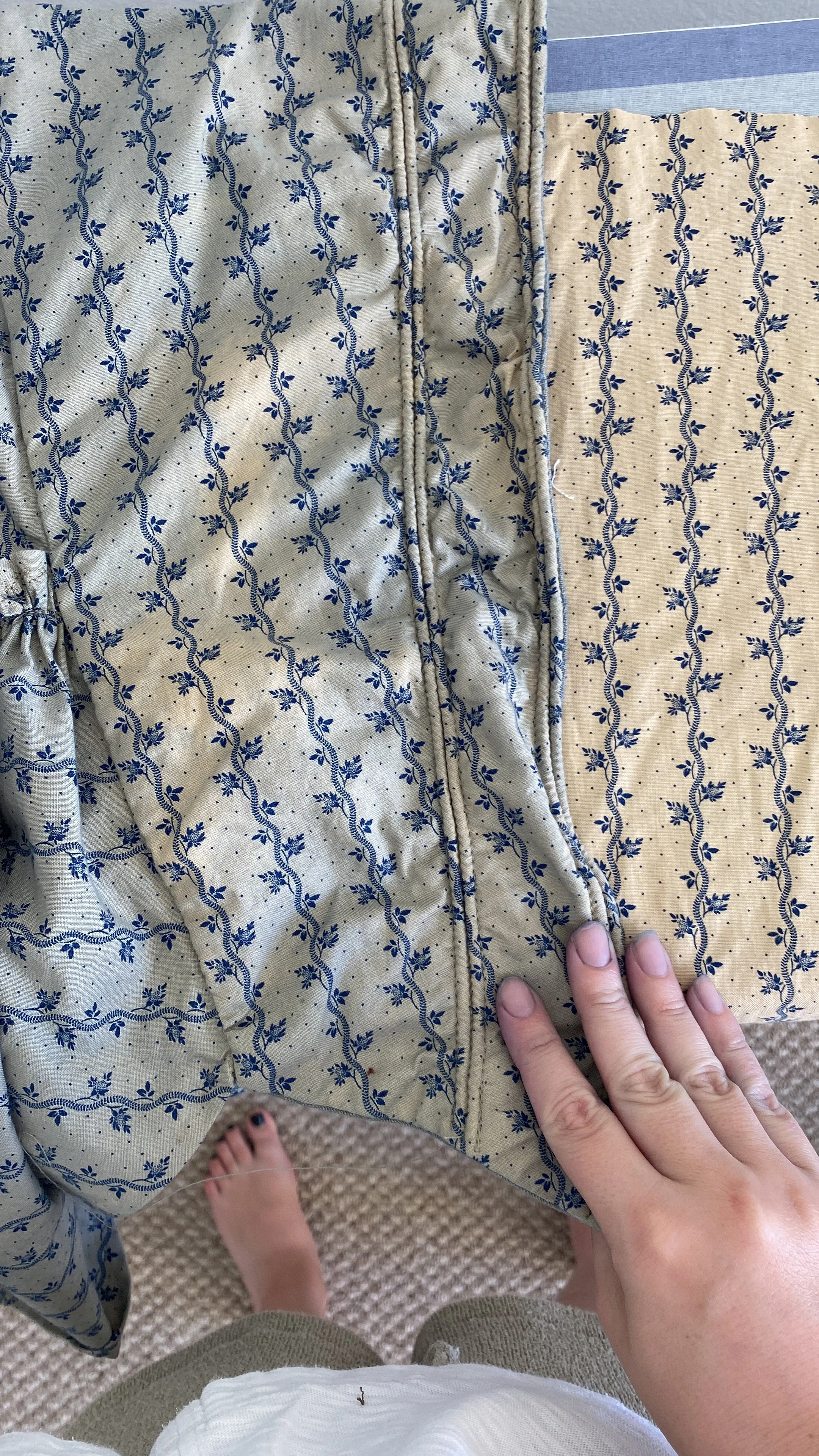
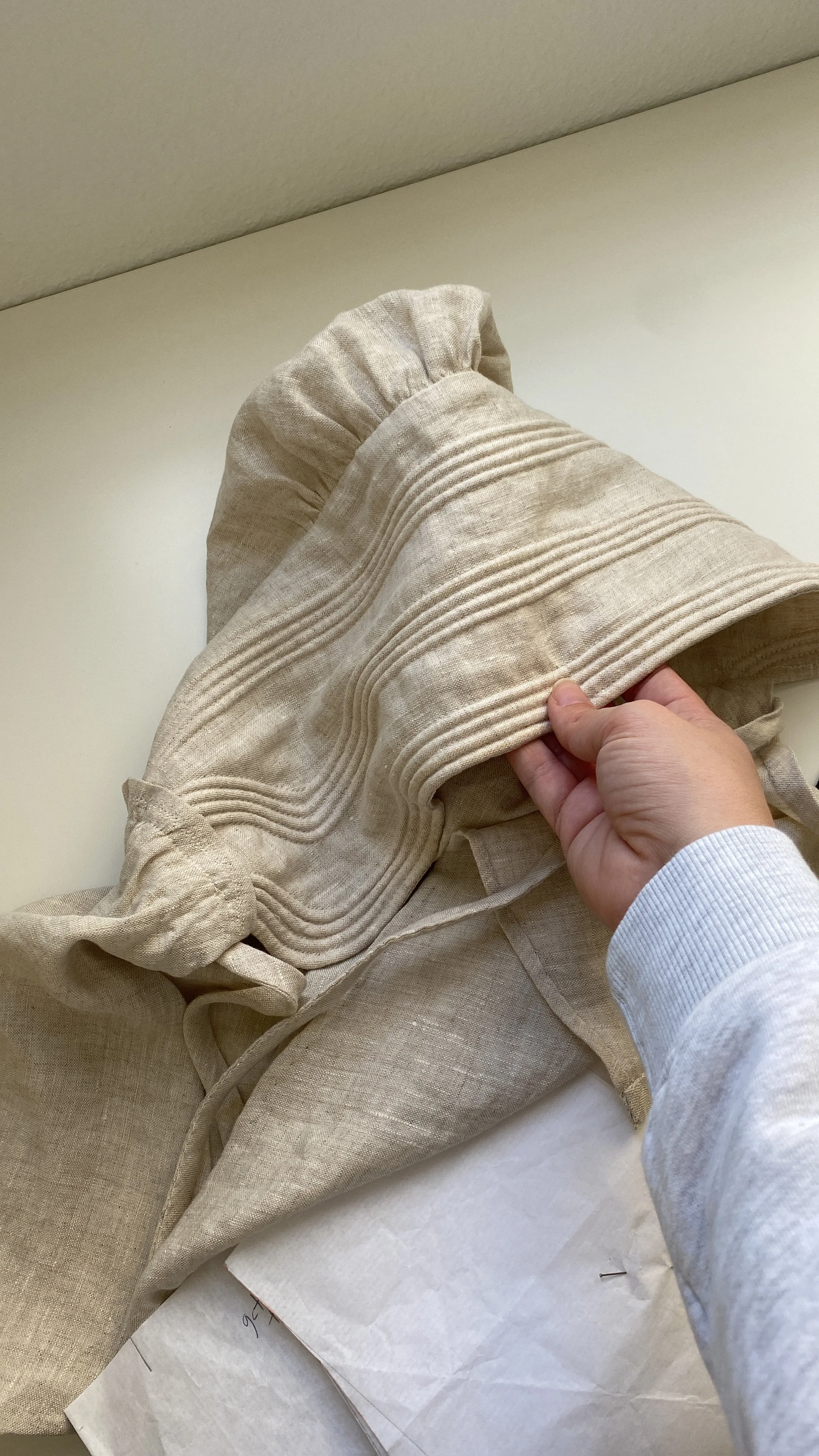
Although some garments were rented, the headpieces were made from scratch, allowing us to extend the concept through their materials and construction. We dyed and distressed prototypes made from raw silk and piping, which provided the structure needed to create the headpieces’ visor-like forms. Designed to function as portable umbrellas, the headpieces required both structural support and a silhouette appropriate to the period.